
La mosca
Traducción del inglés por Daniel Casado Gallegos
Texto original de Katherine Mansfield
Edición por Zulma Mesa Lizcano
Imagen: Evgeni Adutskevich
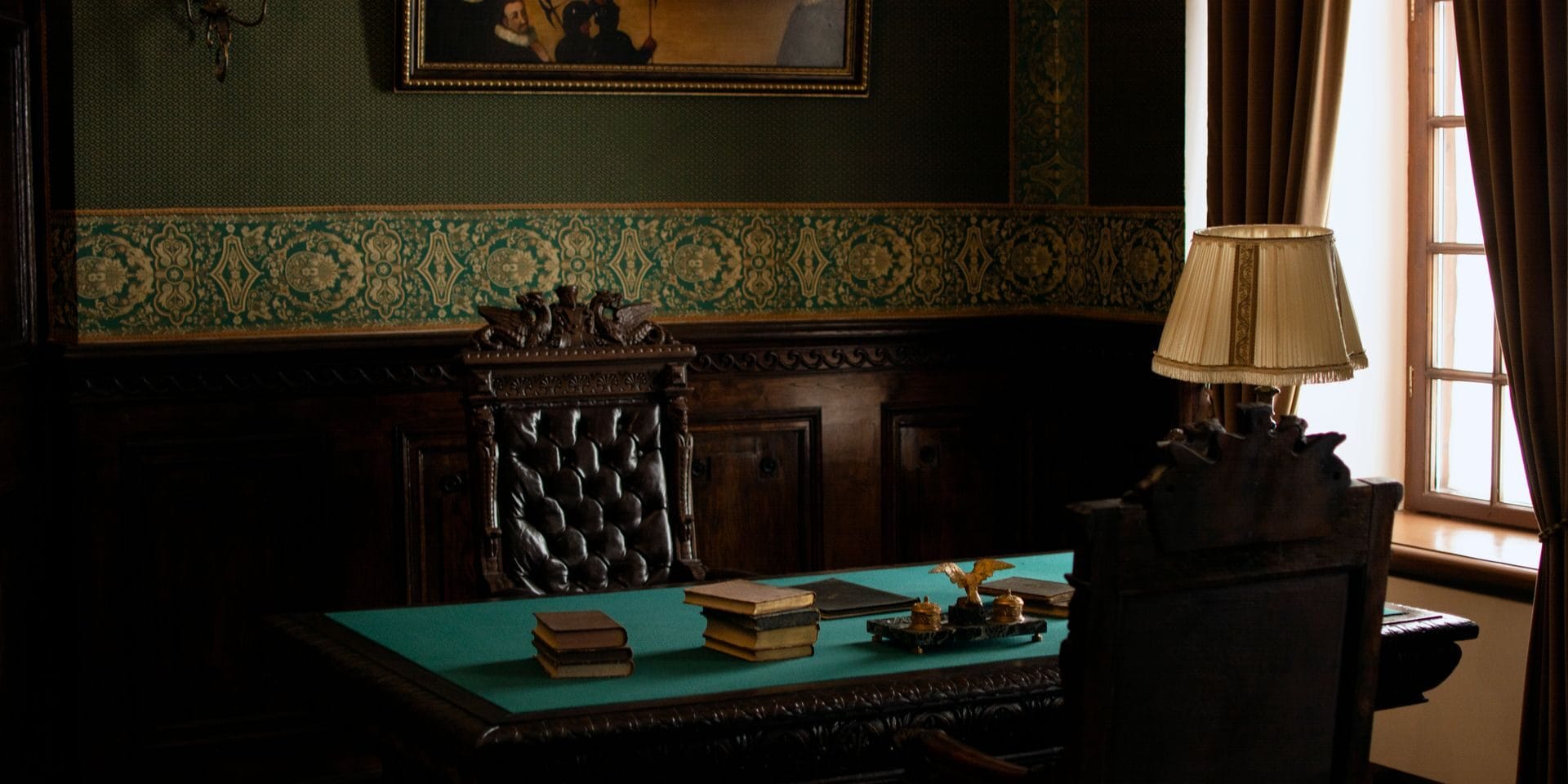
—Se está muy a gusto aquí —chilló el viejo Woodifield y se asomó desde el gran sillón de cuero verde junto al escritorio de su amigo, el jefe, como un bebé que se asoma desde su carriola. Había terminado la conversación; era momento de irse. Pero no quería hacerlo. Desde que se había jubilado, desde su… derrame, la esposa y las hijas lo tenían encerrado en la casa todos los días de la semana excepto el martes. Los martes lo vestían, lo cepillaban y le permitían pasar el día en la City de Londres. Aunque qué hacía allí, la esposa y las hijas no podían imaginárselo. Causar molestias a sus amigos, suponían… Y quizá era cierto. De cualquier modo, uno se aferra a sus últimos placeres como el árbol se aferra a sus últimas hojas. Así que ahí estaba el viejo Woodifield fumando un puro mientras miraba, casi con recelo, al jefe mecerse en su silla: robusto, rosado, cinco años mayor que él y todavía en forma, todavía al mando. Daba gusto verlo.
Con nostalgia, con admiración, agregó la vieja voz:
—Es muy acogedor este lugar, ¡le doy mi palabra!
—Sí, es bastante cómodo —coincidió el jefe y dio vuelta a la página del Financial Times con un abrecartas. A decir verdad, estaba orgulloso de su oficina; le gustaba que la admiraran, sobre todo el viejo Woodifield. Estar ahí, en medio de todo, a la vista de aquella frágil y vieja figura que se asomaba por la bufanda, le provocaba una profunda y firme satisfacción.
—La mandé renovar hace poco —le explicó, como lo había hecho por quién sabe cuántas semanas—. Alfombra nueva —y señaló la alfombra de color rojo brillante con un diseño de grandes anillos blancos—. Muebles nuevos —y asintió hacia el enorme librero y la mesa con patas que parecían caramelo retorcido—. ¡Calefacción eléctrica! —Y señaló con un gesto casi triunfal hacia los cinco cilindros transparentes y aperlados que brillaban tenuemente en la placa cóncava de cobre.
Pero no llamó la atención del viejo Woodifield hacia la fotografía que estaba sobre la mesa: un muchacho de semblante serio, en uniforme, de pie en uno de esos parques espectrales de estudio fotográfico, con nubarrones de utilería detrás de él. No era nueva. Llevaba ahí más de seis años.
—Quería contarle algo —dijo el viejo Woodifield, y sus ojos se ensombrecieron al recordarlo—. ¿Qué era? Lo tenía muy presente cuando salí esta mañana —sus manos comenzaron a temblar y apareció un rubor por encima de su barba.
Pobrecito, ya tiene un pie en la tumba, pensó el jefe. Y, sintiéndose bondadoso, le guiñó un ojo al viejo y dijo en tono de broma:
—Mira, tengo aquí un traguito que te va a sentar de maravilla antes de que salgas al frío. Es una cosa exquisita. No le haría daño ni a un niño—. Tomó la llave de su leontina, abrió el compartimento debajo de su escritorio y sacó una botella oscura y rechoncha. —Esto sí que es medicina —dijo—. Y el hombre de quien la conseguí me confió que viene de las cavas del Castillo de Windsor.
La mandíbula del viejo Woodifield se desencajó al verla. No se habría asombrado tanto si el jefe hubiera sacado un conejo de la manga.
—Es whisky, ¿verdad? —chilló con debilidad.
El jefe giró la botella y con ternura le mostró la etiqueta. Era whisky.
—¿Sabe usted? —dijo mientras miraba perplejo y con detenimiento al jefe—, en mi casa no me dejarían ni tocarlo. —Y parecía a punto de llorar.
—Ah, de esto sabemos un poquito más que las damas —exclamó el jefe mientras se abalanzaba hacia los dos vasos que había sobre la mesa junto a la botella de agua y vertía dos tantos generosos en cada uno de ellos. —Tómatelo de un trago. Te hará bien. Y no le pongas agua. Es un sacrilegio manipular cosas como esta. ¡Ah! —Bebió su whisky de golpe, sacó el pañuelo, se limpió apresuradamente los bigotes y miró de reojo al viejo Woodifield, que saboreaba el suyo en el buche.
El anciano lo tragó, se quedó en silencio por un instante y después dijo con debilidad:
—¡Sabe a nuez!
Pero el calor le recorrió el cuerpo, trepó hasta su cerebro helado y viejo… y, de pronto, recordó.
—Eso era —dijo mientras se levantaba del sillón con esfuerzo—. Pensé que le gustaría saberlo. La semana pasada las muchachas estuvieron en Bélgica para ver la tumba del pobre Reggie y de casualidad pasaron por la tumba de su hijo. Al parecer están muy cerca.
El viejo Woodifield hizo una pausa, pero el jefe no respondió. Sólo un ligero temblor en sus párpados delató que lo había escuchado.
—Las muchachas quedaron encantadas con lo cuidado que está el lugar —chilló la vieja voz—. Procurado con tanto esmero. No podría estar mejor ni en casa. Usted no ha ido, ¿verdad? —¡No, no! —por diversas razones el jefe no había ido.
—Se extiende por millas —balbuceó el viejo Woodifield— y está tan cuidado como un jardín. Hay flores en todas las tumbas. Y hay senderos amplios —se notaba en su voz cuánto le agradaban los senderos amplios.
Hubo otro silencio. De pronto, el viejo hombre se animó de manera sorprendente.
—¿Sabe cuánto le cobró el hotel a las muchachas por un tarro de mermelada? —preguntó con voz aguda— ¡Diez francos! Un robo, eso es lo que es. Era un tarrito, o eso dice Gertrude, no más grande que una moneda de media corona. Y sólo había probado una cucharadita cuando le cobraron los diez francos. Gertrude se trajo el tarro para darles una lección. E hizo bien: a eso le llamo lucrar con nuestros sentimientos. Creen que sólo porque estamos echando un vistazo podemos pagar cualquier cosa. Eso es lo que es. —Y se encaminó hacia la puerta.
—¡Hizo bien, hizo bien! —exclamó el jefe, aunque no tenía la menor idea de qué. Rodeó su escritorio, siguió los pasos lentos que se arrastraron hacia la puerta y despidió al viejo. Woodifield se había ido.
Durante un buen rato, el jefe permaneció ahí, con la mirada fija en el vacío, mientras el mensajero canoso de la oficina, que lo observaba, lo esquivaba al entrar y al salir en su cubículo como un perro que espera que lo saquen a pasear. Luego dijo: —No recibiré a nadie durante media hora, Macey. ¿Entendido? A nadie.
—Muy bien, señor.
Se cerró la puerta, los pasos firmes y pesados cruzaron de nuevo la alfombra brillante, el cuerpo gordo se desplomó en la silla reclinable e, inclinándose hacia enfrente, el jefe se cubrió el rostro con las manos. Quiso, pretendió, había planeado llorar…
Le había causado una terrible conmoción que el viejo Woodifield soltara un comentario sobre la tumba de su muchacho. Fue como si la tierra se hubiera abierto y hubiera visto al muchacho yacer ahí, con las hijas de Woodifield mirándolo fijamente desde arriba. Porque era extraño. Aunque habían pasado más de seis años, el jefe nunca pensaba en el muchacho, sino como alguien que descansaba intacto, inmaculado en su uniforme, dormido para siempre. —¡Mi hijo! —gimoteó el jefe. Pero no hubo lágrimas. En el pasado, en los primeros meses e incluso años después de su muerte, bastaba con decir esas palabras para que una pena lo abrumara y sólo un llanto violento e incontrolable podía aliviarlo. El tiempo, aseguró entonces, le dijo a todo el mundo, no cambiaría nada. Otros hombres quizá se repondrían, quizá podrían superar la pérdida, pero él no. ¿Cómo era posible? Su hijo era hijo único. Desde el día de su nacimiento, el jefe se había afanado en construir este negocio para él; no tenía sentido si no era así. ¿Cómo diablos habría podido trabajar como un esclavo, privarse de placeres y seguir adelante todos estos años sin la promesa siempre presente de que el muchacho ocuparía su lugar y continuaría donde él lo dejara?
Y esa promesa había estado tan cerca de cumplirse. El muchacho había estado aprendiendo el oficio durante un año antes de la guerra. Todas las mañanas habían salido juntos; habían regresado en el mismo tren. ¡Y cuántas felicitaciones había recibido por ser su padre! Con mucha razón: su hijo se había acoplado de maravilla. En cuanto a su popularidad con los empleados, cada uno de ellos, hasta el viejo Macey, no se cansaban de elogiarlo. Y no era engreído en lo más mínimo. No. Sólo expresaba su propia naturaleza luminosa con la palabra precisa para cada persona, con aquel aspecto juvenil y su hábito de decir: —¡Simplemente espléndido!
Pero todo eso había quedado atrás, como si nunca hubiera sucedido. Llegó el día en que Macey le entregó al jefe un telegrama que hizo que todo se derrumbara a su alrededor. “Con una gran pena, lamentamos comunicarle…” Y abandonó la oficina destrozado, con su vida en ruinas.
Hacía seis años, seis años… ¡Qué rápido pasaba el tiempo! Podría haber sucedido ayer. El jefe apartó las manos del rostro; estaba desconcertado. Algo no andaba bien. No se sentía como quería sentirse. Decidió levantarse y mirar la fotografía del muchacho. Pero no era su fotografía favorita; la expresión era forzada. Parecía fría, incluso seria. Él jamás había tenido ese semblante.
En ese momento, el jefe notó que una mosca había caído en su tintero y se esforzaba, débil pero desesperadamente, por salir trepando de nuevo. ¡Auxilio!, ¡auxilio!, decían esas patitas que luchaban. Pero las paredes del tintero estaban húmedas y resbalosas. La mosca volvió a caer y empezó a nadar. El jefe tomó una pluma, sacó a la mosca de la tinta y la sacudió sobre un pedazo de papel secante. Por una fracción de segundo permaneció inmóvil sobre la mancha oscura que rezumaba a su alrededor. Entonces las patas delanteras se agitaron, tomaron impulso y, levantando su cuerpecito empapado, emprendió la colosal tarea de limpiarse la tinta de las alas. Por encima y por debajo, por encima y por debajo, pasaba la pata a lo largo del ala, como la piedra pasa por encima y por debajo de la guadaña. Luego hubo una pausa mientras la mosca, que parecía estar de pie en la punta de sus dedos, intentaba abrir un ala y después la otra. Lo logró al fin y, sentadita, comenzó a limpiarse la cara como un gato diminuto. Uno podía imaginar que las patitas delanteras se frotaban con suavidad entre sí, con júbilo. El trágico peligro había llegado a su fin; la mosca había escapado, estaba lista para vivir de nuevo.
Pero justo entonces el jefe tuvo una idea. Hundió la pluma de nuevo en la tinta, apoyó su gruesa muñeca sobre el papel secante y, mientras la mosca comprobaba el funcionamiento de sus alas, cayó sobre ella una pesada gota de tinta. ¡A ver cómo salía de esa! ¡Cómo, en verdad! La pequeña mendiga parecía estar del todo acobardada, aturdida y temerosa de moverse por lo que pudiera suceder después. Pero luego, como si le doliera, se arrastró hacia enfrente. Las patas delanteras se agitaron, se afianzaron y, con mayor lentitud, la tarea comenzó desde el principio. Es una diablita con muchas agallas, pensó el jefe, y sintió una admiración genuina por la valentía de la mosca. Así se debían enfrentar las cosas; ese era el espíritu correcto. Nunca rendirse, sólo era cuestión de… Pero la mosca había vuelto a terminar la difícil tarea, y el jefe apenas tuvo tiempo de recargar la pluma para dejar caer otra gota oscura en el cuerpo recién limpio. ¿Qué pasaría esta vez? Siguió un doloroso momento de incertidumbre. Pero he aquí que las patas delanteras de nueva cuenta se agitaban. El jefe sintió una sensación de alivio. Se inclinó sobre la mosca y le dijo con ternura: —Ingeniosita de mier… —Y tuvo la brillante ocurrencia de soplarle para ayudarla con el proceso de secado. Aun así, ahora había algo tímido y débil en sus esfuerzos y, mientras sumergía la pluma hasta el fondo del tintero, el jefe decidió que está vez sería la última. Y así fue. La última mancha cayó sobre el papel secante humedecido y la mosca empapada quedó sobre él, inmóvil. Las patas traseras estaban pegadas al cuerpo y las delanteras no se veían por ningún lado.
—Vamos —dijo el jefe—. ¡Espabílate! —Y en vano le dio un golpecito con la pluma. No pasó nada ni era probable que pasara. La mosca estaba muerta. El jefe levantó el cadáver con la punta del abrecartas y lo arrojó al cesto de basura. Pero una sensación tan desgarradora de angustia lo invadió que sintió un terror verdadero. Se inclinó hacia adelante y presionó el timbre para llamar a Macey.
—Tráeme papel secante nuevo—dijo con seriedad, —y rápido. —Y mientras el viejo se alejaba silencioso, intentó recordar en qué había estado pensando. ¿Qué era? Era… Sacó el pañuelo y se lo pasó por dentro del cuello de la camisa. Por más que lo intentaba, no podía recordarlo.
The Fly
Y’are very snug in here,’ piped old Mr. Woodifield, and peered out of the great, green-leather armchair by his friend the boss’s desk as a baby peers out of its pram. His talk was over; it was time for him to be off. But he did not want to go. Since he had retired, since his…stroke, the wife and the girls kept him boxed up in the house every day of the week except Tuesday. On Tuesday he was dressed and brushed and allowed to cut back to the City for the day. Though what he did there the wife and girls couldn’t imagine. Made a nuisance of himself to his friends, they supposed…Well, perhaps so. All the same, we cling to our last pleasures as the tree clings to its last leaves. So there sat old Woodifield, smoking a cigar and staring almost greedily at the boss, who rolled in his office chair, stout, rosy, five years older than he, and still going strong, still at the helm. It did one good to see him.
Wistfully, admiringly, the old voice added, ‘It’s snug in here, upon my word!’
‘Yes, it’s comfortable enough,’ agreed the boss, and he flipped the Financial Times with a paper-knife. As a matter of fact he was proud of his room; he liked to have it admired, especially by old Woodifield. It gave him a feeling of deep, solid satisfaction to be planted there in the midst of it in full view of that frail old figure in the muffler.
‘I’ve had it done up lately,’ he explained, as he had explained for the past how many weeks.
‘New carpet,’ and he pointed to the bright red carpet with a pattern of large white rings. ‘New furniture,’ and he nodded towards the massive bookcase and the table with legs like twisted treacle. ‘Electric heating!’ He waved almost exultantly towards the five transparent, pearly sausages glowing so softly in the tilted copper pan.
But he did not draw old Woodifield’s attention to the photograph over the table of a grave-looking boy in uniform standing in one of those spectral photographers’ parks with photographers’ storm-clouds behind him. It was not new. It had been there for over six years.
‘There was something I wanted to tell you,’ said old Woodifield, and his eyes grew dim remembering. ‘Now what was it? I had it in my mind when I started out this morning.’ His hands began to tremble, and patches of red showed above his beard.
Poor old chap, he’s on his last pins, thought the boss. And, feeling kindly, he winked at the old man, and said jokingly,
‘I tell you what. I’ve got a little drop of something here that’ll do you good before you go out into the cold again. It’s beautiful stuff. It wouldn’t hurt a child.’ He took a key off his watch-chain, unlocked a cupboard below his desk, and drew forth a dark, squat bottle. ‘That’s the medicine,’ said he. ‘And the man from whom I got it told me on the strict Q.T. it came from the cellars at Windsor Castle.’
Old Woodifield’s mouth fell open at the sight. He couldn’t have looked more surprised if the boss had produced a rabbit.
‘It’s whisky, ain’t it?’ he piped feebly.
The boss turned the bottle and lovingly showed him the label. Whisky it was.
‘D’you know,’ said he, peering up at the boss wonderingly, ‘they won’t let me touch it at home.’ And he looked as though he was going to cry.
‘Ah, that’s where we know a bit more than the ladies,’ cried the boss, swooping across for two tumblers that stood on the table with the water-bottle, and pouring a generous finger into each. ‘Drink it down. It’ll do you good. And don’t put any water with it. It’s sacrilege to tamper with stuff like this. Ah!’ He tossed off his, pulled out his handkerchief, hastily wiped his moustaches, and cocked an eye at old Woodifield, who was rolling his in his chaps.
The old man swallowed, was silent a moment, and then said faintly, ‘It’s nutty!’
But it warmed him; as it crept into his chill old brain he remembered.
‘That was it,’ he said, heaving himself out of his chair.
‘I thought you’d like to know. The girls were in Belgium last week having a look at poor Reggie’s grave, and they happened to come across your boy’s. They’re quite near each other, it seems.’
Old Woodifield paused, but the boss made no reply. Only a quiver in his eyelids showed that he heard.
‘The girls were delighted with the way the place is kept,’ piped the old voice. ‘Beautifully looked after. Couldn’t be better if they were at home. You’ve not been across, have yer?’
‘No, no!’ For various reasons the boss had not been across.
‘There’s miles of it,’ quavered old Woodifield, ‘and it’s all as neat as a garden. Flowers growing on all the graves. Nice broad paths.’ It was plain from his voice how much he liked a nice broad path.
The pause came again. Then the old man brightened wonderfully.
‘D’you know what the hotel made the girls pay for a pot of jam?’ he piped. ‘Ten francs! Robbery, I call it. It was a little pot, so Gertrude says, no bigger than a half-crown. And she hadn’t taken more than a spoonful when they charged her ten francs. Gertrude brought the pot away with her to teach ‘em a lesson. Quite right, too; it’s trading on our feelings. They think because we’re over there having a look round we’re ready to pay anything. That’s what it is.’ And he turned towards the door.
‘Quite right, quite right!’ cried the boss, though what was quite right he hadn’t the least idea. He came round by his desk, followed the shuffling footsteps to the door, and saw the old fellow out. Woodifield was gone.
For a long moment the boss stayed, staring at nothing, while the grey-haired office messenger, watching him, dodged in and out of his cubby-hole like a dog that expects to be taken for a run. Then: ‘I’ll see nobody for half an hour, Macey,’ said the boss. ‘Understand! Nobody at all.’
‘Very good, sir.’
The door shut, the firm heavy steps recrossed the bright carpet, the fat body plumped down in the spring chair, and leaning forward, the boss covered his face with his hands. He wanted, he intended, he had arranged to weep…
It had been a terrible shock to him when old Woodifield sprang that remark upon him about the boy’s grave. It was exactly as though the earth had opened and he had seen the boy lying there with Woodifield’s girls staring down at him. For it was strange. Although over six years had passed away, the boss never thought of the boy except as lying unchanged, unblemished in his uniform, asleep for ever. ‘My son!’ groaned the boss. But no tears came yet. In the past, in the first months and even years after the boy’s death, he had only to say those words to be overcome by such grief that nothing short of a violent fit of weeping could relieve him. Time, he had declared then, he had told everybody, could make no difference. Other men perhaps might recover, might live their loss down, but not he. How was it possible! His boy was an only son. Ever since his birth the boss had worked at building up this business for him; it had no other meaning if it was not for the boy. Life itself had come to have no other meaning. How on earth could he have slaved, denied himself, kept going all those years without the promise for ever before him of the boy’s stepping into his shoes and carrying on where he left off?
And that promise had been so near being fulfilled. The boy had been in the office learning the ropes for a year before the war. Every morning they had started off together; they had come back by the same train. And what congratulations he had received as the boy’s father! No wonder; he had taken to it marvellously. As to his popularity with the staff, every man jack of them down to old Macey couldn’t make enough of the boy. And he wasn’t in the least spoilt. No, he was just his bright natural self, with the right word for everybody, with that boyish look and his habit of saying, ‘Simply splendid!’
But all that was over and done with as though it never had been. The day had come when Macey had handed him the telegram that brought the whole place crashing about his head. ‘Deeply regret to inform you …’ And he had left the office a broken man, with his life in ruins.
Six years ago, six years…. How quickly time passed! It might have happened yesterday. The boss took his hands from his face; he was puzzled. Something seemed to be wrong with him. He wasn’t feeling as he wanted to feel. He decided to get up and have a look at the boy’s photograph. But it wasn’t a favourite photograph of his; the expression was unnatural. It was cold, even stern-looking. The boy had never looked like that.
At that moment the boss noticed that a fly had fallen into his broad inkpot, and was trying feebly but desperately to clamber out again. Help! Help! said those struggling legs. But the sides of the inkpot were wet and slippery; it fell back again and began to swim. The boss took up a pen, picked the fly out of the ink, and shook it on to a piece of blotting-paper. For a fraction of a second it lay still on the dark patch that oozed round it. Then the front legs waved, took hold, and, pulling its small, sodden body up, it began the immense task of cleaning the ink from its wings. Over and under, over and under, went a leg along a wing as the stone goes over and under the scythe. Then there was a pause, while the fly, seeming to stand on the tips of its toes, tried to expand first one wing and then the other. It succeeded at last, and, sitting down, it began, like a minute cat, to clean its face. Now one could imagine that the little front legs rubbed against each other lightly, joyfully. The horrible danger was over; it had escaped; it was ready for life again.
But just then the boss had an idea. He plunged his pen back into the ink, leaned his thick wrist on the blotting-paper, and as the fly tried its wings down came a great heavy blot. What would it make of that! What indeed! The little beggar seemed absolutely cowed, stunned, and afraid to move because of what would happen next. But then, as if painfully, it dragged itself forward. The front legs waved, caught hold, and, more slowly this time, the task began from the beginning.
He’s a plucky little devil, thought the boss, and he felt a real admiration for the fly’s courage. That was the way to tackle things; that was the right spirit. Never say die; it was only a question of… But the fly had again finished its laborious task, and the boss had just time to refill his pen, to shake fair and square on the new-cleaned body yet another dark drop. What about it this time? A painful moment of suspense followed. But behold, the front legs were again waving; the boss felt a rush of relief. He leaned over the fly and said to it tenderly, ‘You artful little b…’ And he actually had the brilliant notion of breathing on it to help the drying process. All the same, there was something timid and weak about its efforts now, and the boss decided that this time should be the last, as he dipped the pen deep into the inkpot.
It was. The last blot fell on the soaked blotting-paper, and the draggled fly lay in it and did not stir. The back legs were stuck to the body; the front legs were not to be seen.
‘Come on,’ said the boss. ‘Look sharp!’ And he stirred it with his pen in vain. Nothing happened or was likely to happen. The fly was dead.
The boss lifted the corpse on the end of the paper-knife and flung it into the waste-paper basket. But such a grinding feeling of wretchedness seized him that he felt positively frightened. He started forward and pressed the bell for Macey. ‘Bring me some fresh blotting-paper,’ he said sternly, ‘and look sharp about it.’ And while the old dog padded away he fell to wondering what it was he had been thinking about before. What was it? It was… He took out his handkerchief and passed it inside his collar. For the life of him he could not remember.
Tomado de Ten-Minute Book Club de la Universidad de Oxford
The fly
Y’are very snug in here,’ piped old Mr. Woodifield, and peered out of the great, green-leather armchair by his friend the boss’s desk as a baby peers out of its pram. His talk was over; it was time for him to be off. But he did not want to go. Since he had retired, since his…stroke, the wife and the girls kept him boxed up in the house every day of the week except Tuesday. On Tuesday he was dressed and brushed and allowed to cut back to the City for the day. Though what he did there the wife and girls couldn’t imagine. Made a nuisance of himself to his friends, they supposed…Well, perhaps so. All the same, we cling to our last pleasures as the tree clings to its last leaves. So there sat old Woodifield, smoking a cigar and staring almost greedily at the boss, who rolled in his office chair, stout, rosy, five years older than he, and still going strong, still at the helm. It did one good to see him.
Wistfully, admiringly, the old voice added, ‘It’s snug in here, upon my word!’
‘Yes, it’s comfortable enough,’ agreed the boss, and he flipped the Financial Times with a paper-knife. As a matter of fact he was proud of his room; he liked to have it admired, especially by old Woodifield. It gave him a feeling of deep, solid satisfaction to be planted there in the midst of it in full view of that frail old figure in the muffler.
‘I’ve had it done up lately,’ he explained, as he had explained for the past how many weeks.
‘New carpet,’ and he pointed to the bright red carpet with a pattern of large white rings. ‘New furniture,’ and he nodded towards the massive bookcase and the table with legs like twisted treacle. ‘Electric heating!’ He waved almost exultantly towards the five transparent, pearly sausages glowing so softly in the tilted copper pan.
But he did not draw old Woodifield’s attention to the photograph over the table of a grave-looking boy in uniform standing in one of those spectral photographers’ parks with photographers’ storm-clouds behind him. It was not new. It had been there for over six years.
‘There was something I wanted to tell you,’ said old Woodifield, and his eyes grew dim remembering. ‘Now what was it? I had it in my mind when I started out this morning.’ His hands began to tremble, and patches of red showed above his beard.
Poor old chap, he’s on his last pins, thought the boss. And, feeling kindly, he winked at the old man, and said jokingly,
‘I tell you what. I’ve got a little drop of something here that’ll do you good before you go out into the cold again. It’s beautiful stuff. It wouldn’t hurt a child.’ He took a key off his watch-chain, unlocked a cupboard below his desk, and drew forth a dark, squat bottle. ‘That’s the medicine,’ said he. ‘And the man from whom I got it told me on the strict Q.T. it came from the cellars at Windsor Castle.’
Old Woodifield’s mouth fell open at the sight. He couldn’t have looked more surprised if the boss had produced a rabbit.
‘It’s whisky, ain’t it?’ he piped feebly.
The boss turned the bottle and lovingly showed him the label. Whisky it was.
‘D’you know,’ said he, peering up at the boss wonderingly, ‘they won’t let me touch it at home.’ And he looked as though he was going to cry.
‘Ah, that’s where we know a bit more than the ladies,’ cried the boss, swooping across for two tumblers that stood on the table with the water-bottle, and pouring a generous finger into each. ‘Drink it down. It’ll do you good. And don’t put any water with it. It’s sacrilege to tamper with stuff like this. Ah!’ He tossed off his, pulled out his handkerchief, hastily wiped his moustaches, and cocked an eye at old Woodifield, who was rolling his in his chaps.
The old man swallowed, was silent a moment, and then said faintly, ‘It’s nutty!’
But it warmed him; as it crept into his chill old brain he remembered.
‘That was it,’ he said, heaving himself out of his chair.
‘I thought you’d like to know. The girls were in Belgium last week having a look at poor Reggie’s grave, and they happened to come across your boy’s. They’re quite near each other, it seems.’
Old Woodifield paused, but the boss made no reply. Only a quiver in his eyelids showed that he heard.
‘The girls were delighted with the way the place is kept,’ piped the old voice. ‘Beautifully looked after. Couldn’t be better if they were at home. You’ve not been across, have yer?’
‘No, no!’ For various reasons the boss had not been across.
‘There’s miles of it,’ quavered old Woodifield, ‘and it’s all as neat as a garden. Flowers growing on all the graves. Nice broad paths.’ It was plain from his voice how much he liked a nice broad path.
The pause came again. Then the old man brightened wonderfully.
‘D’you know what the hotel made the girls pay for a pot of jam?’ he piped. ‘Ten francs! Robbery, I call it. It was a little pot, so Gertrude says, no bigger than a half-crown. And she hadn’t taken more than a spoonful when they charged her ten francs. Gertrude brought the pot away with her to teach ‘em a lesson. Quite right, too; it’s trading on our feelings. They think because we’re over there having a look round we’re ready to pay anything. That’s what it is.’ And he turned towards the door.
‘Quite right, quite right!’ cried the boss, though what was quite right he hadn’t the least idea. He came round by his desk, followed the shuffling footsteps to the door, and saw the old fellow out. Woodifield was gone.
For a long moment the boss stayed, staring at nothing, while the grey-haired office messenger, watching him, dodged in and out of his cubby-hole like a dog that expects to be taken for a run. Then: ‘I’ll see nobody for half an hour, Macey,’ said the boss. ‘Understand! Nobody at all.’
‘Very good, sir.’
The door shut, the firm heavy steps recrossed the bright carpet, the fat body plumped down in the spring chair, and leaning forward, the boss covered his face with his hands. He wanted, he intended, he had arranged to weep…
It had been a terrible shock to him when old Woodifield sprang that remark upon him about the boy’s grave. It was exactly as though the earth had opened and he had seen the boy lying there with Woodifield’s girls staring down at him. For it was strange. Although over six years had passed away, the boss never thought of the boy except as lying unchanged, unblemished in his uniform, asleep for ever. ‘My son!’ groaned the boss. But no tears came yet. In the past, in the first months and even years after the boy’s death, he had only to say those words to be overcome by such grief that nothing short of a violent fit of weeping could relieve him. Time, he had declared then, he had told everybody, could make no difference. Other men perhaps might recover, might live their loss down, but not he. How was it possible! His boy was an only son. Ever since his birth the boss had worked at building up this business for him; it had no other meaning if it was not for the boy. Life itself had come to have no other meaning. How on earth could he have slaved, denied himself, kept going all those years without the promise for ever before him of the boy’s stepping into his shoes and carrying on where he left off?
And that promise had been so near being fulfilled. The boy had been in the office learning the ropes for a year before the war. Every morning they had started off together; they had come back by the same train. And what congratulations he had received as the boy’s father! No wonder; he had taken to it marvellously. As to his popularity with the staff, every man jack of them down to old Macey couldn’t make enough of the boy. And he wasn’t in the least spoilt. No, he was just his bright natural self, with the right word for everybody, with that boyish look and his habit of saying, ‘Simply splendid!’
But all that was over and done with as though it never had been. The day had come when Macey had handed him the telegram that brought the whole place crashing about his head. ‘Deeply regret to inform you …’ And he had left the office a broken man, with his life in ruins.
Six years ago, six years…. How quickly time passed! It might have happened yesterday. The boss took his hands from his face; he was puzzled. Something seemed to be wrong with him. He wasn’t feeling as he wanted to feel. He decided to get up and have a look at the boy’s photograph. But it wasn’t a favourite photograph of his; the expression was unnatural. It was cold, even stern-looking. The boy had never looked like that.
At that moment the boss noticed that a fly had fallen into his broad inkpot, and was trying feebly but desperately to clamber out again. Help! Help! said those struggling legs. But the sides of the inkpot were wet and slippery; it fell back again and began to swim. The boss took up a pen, picked the fly out of the ink, and shook it on to a piece of blotting-paper. For a fraction of a second it lay still on the dark patch that oozed round it. Then the front legs waved, took hold, and, pulling its small, sodden body up, it began the immense task of cleaning the ink from its wings. Over and under, over and under, went a leg along a wing as the stone goes over and under the scythe. Then there was a pause, while the fly, seeming to stand on the tips of its toes, tried to expand first one wing and then the other. It succeeded at last, and, sitting down, it began, like a minute cat, to clean its face. Now one could imagine that the little front legs rubbed against each other lightly, joyfully. The horrible danger was over; it had escaped; it was ready for life again.
But just then the boss had an idea. He plunged his pen back into the ink, leaned his thick wrist on the blotting-paper, and as the fly tried its wings down came a great heavy blot. What would it make of that! What indeed! The little beggar seemed absolutely cowed, stunned, and afraid to move because of what would happen next. But then, as if painfully, it dragged itself forward. The front legs waved, caught hold, and, more slowly this time, the task began from the beginning.
He’s a plucky little devil, thought the boss, and he felt a real admiration for the fly’s courage. That was the way to tackle things; that was the right spirit. Never say die; it was only a question of… But the fly had again finished its laborious task, and the boss had just time to refill his pen, to shake fair and square on the new-cleaned body yet another dark drop. What about it this time? A painful moment of suspense followed. But behold, the front legs were again waving; the boss felt a rush of relief. He leaned over the fly and said to it tenderly, ‘You artful little b…’ And he actually had the brilliant notion of breathing on it to help the drying process. All the same, there was something timid and weak about its efforts now, and the boss decided that this time should be the last, as he dipped the pen deep into the inkpot.
It was. The last blot fell on the soaked blotting-paper, and the draggled fly lay in it and did not stir. The back legs were stuck to the body; the front legs were not to be seen.
‘Come on,’ said the boss. ‘Look sharp!’ And he stirred it with his pen in vain. Nothing happened or was likely to happen. The fly was dead.
The boss lifted the corpse on the end of the paper-knife and flung it into the waste-paper basket. But such a grinding feeling of wretchedness seized him that he felt positively frightened. He started forward and pressed the bell for Macey. ‘Bring me some fresh blotting-paper,’ he said sternly, ‘and look sharp about it.’ And while the old dog padded away he fell to wondering what it was he had been thinking about before. What was it? It was… He took out his handkerchief and passed it inside his collar. For the life of him he could not remember.
La mosca
—Se está muy a gusto aquí —chilló el viejo Woodifield y se asomó desde el gran sillón de cuero verde junto al escritorio de su amigo, el jefe, como un bebé que se asoma desde su carriola. Había terminado la conversación; era momento de irse. Pero no quería hacerlo. Desde que se había jubilado, desde su… derrame, la esposa y las hijas lo tenían encerrado en la casa todos los días de la semana excepto el martes. Los martes lo vestían, lo cepillaban y le permitían pasar el día en la City de Londres. Aunque qué hacía allí, la esposa y las hijas no podían imaginárselo. Causar molestias a sus amigos, suponían… Y quizá era cierto. De cualquier modo, uno se aferra a sus últimos placeres como el árbol se aferra a sus últimas hojas. Así que ahí estaba el viejo Woodifield fumando un puro mientras miraba, casi con recelo, al jefe mecerse en su silla: robusto, rosado, cinco años mayor que él y todavía en forma, todavía al mando. Daba gusto verlo.
Con nostalgia, con admiración, agregó la vieja voz:
—Es muy acogedor este lugar, ¡le doy mi palabra!
—Sí, es bastante cómodo —coincidió el jefe y dio vuelta a la página del Financial Times con un abrecartas. A decir verdad, estaba orgulloso de su oficina; le gustaba que la admiraran, sobre todo el viejo Woodifield. Estar ahí, en medio de todo, a la vista de aquella frágil y vieja figura que se asomaba por la bufanda, le provocaba una profunda y firme satisfacción.
—La mandé renovar hace poco —le explicó, como lo había hecho por quién sabe cuántas semanas—. Alfombra nueva —y señaló la alfombra de color rojo brillante con un diseño de grandes anillos blancos—. Muebles nuevos —y asintió hacia el enorme librero y la mesa con patas que parecían caramelo retorcido—. ¡Calefacción eléctrica! —Y señaló con un gesto casi triunfal hacia los cinco cilindros transparentes y aperlados que brillaban tenuemente en la placa cóncava de cobre.
Pero no llamó la atención del viejo Woodifield hacia la fotografía que estaba sobre la mesa: un muchacho de semblante serio, en uniforme, de pie en uno de esos parques espectrales de estudio fotográfico, con nubarrones de utilería detrás de él. No era nueva. Llevaba ahí más de seis años.
—Quería contarle algo —dijo el viejo Woodifield, y sus ojos se ensombrecieron al recordarlo—. ¿Qué era? Lo tenía muy presente cuando salí esta mañana —sus manos comenzaron a temblar y apareció un rubor por encima de su barba.
Pobrecito, ya tiene un pie en la tumba, pensó el jefe. Y, sintiéndose bondadoso, le guiñó un ojo al viejo y dijo en tono de broma:
—Mira, tengo aquí un traguito que te va a sentar de maravilla antes de que salgas al frío. Es una cosa exquisita. No le haría daño ni a un niño—. Tomó la llave de su leontina, abrió el compartimento debajo de su escritorio y sacó una botella oscura y rechoncha. —Esto sí que es medicina —dijo—. Y el hombre de quien la conseguí me confió que viene de las cavas del Castillo de Windsor.
La mandíbula del viejo Woodifield se desencajó al verla. No se habría asombrado tanto si el jefe hubiera sacado un conejo de la manga.
—Es whisky, ¿verdad? —chilló con debilidad.
El jefe giró la botella y con ternura le mostró la etiqueta. Era whisky.
—¿Sabe usted? —dijo mientras miraba perplejo y con detenimiento al jefe—, en mi casa no me dejarían ni tocarlo. —Y parecía a punto de llorar.
—Ah, de esto sabemos un poquito más que las damas —exclamó el jefe mientras se abalanzaba hacia los dos vasos que había sobre la mesa junto a la botella de agua y vertía dos tantos generosos en cada uno de ellos. —Tómatelo de un trago. Te hará bien. Y no le pongas agua. Es un sacrilegio manipular cosas como esta. ¡Ah! —Bebió su whisky de golpe, sacó el pañuelo, se limpió apresuradamente los bigotes y miró de reojo al viejo Woodifield, que saboreaba el suyo en el buche.
El anciano lo tragó, se quedó en silencio por un instante y después dijo con debilidad:
—¡Sabe a nuez!
Pero el calor le recorrió el cuerpo, trepó hasta su cerebro helado y viejo… y, de pronto, recordó.
—Eso era —dijo mientras se levantaba del sillón con esfuerzo—. Pensé que le gustaría saberlo. La semana pasada las muchachas estuvieron en Bélgica para ver la tumba del pobre Reggie y de casualidad pasaron por la tumba de su hijo. Al parecer están muy cerca.
El viejo Woodifield hizo una pausa, pero el jefe no respondió. Sólo un ligero temblor en sus párpados delató que lo había escuchado.
—Las muchachas quedaron encantadas con lo cuidado que está el lugar —chilló la vieja voz—. Procurado con tanto esmero. No podría estar mejor ni en casa. Usted no ha ido, ¿verdad? —¡No, no! —por diversas razones el jefe no había ido.
—Se extiende por millas —balbuceó el viejo Woodifield— y está tan cuidado como un jardín. Hay flores en todas las tumbas. Y hay senderos amplios —se notaba en su voz cuánto le agradaban los senderos amplios.
Hubo otro silencio. De pronto, el viejo hombre se animó de manera sorprendente.
—¿Sabe cuánto le cobró el hotel a las muchachas por un tarro de mermelada? —preguntó con voz aguda— ¡Diez francos! Un robo, eso es lo que es. Era un tarrito, o eso dice Gertrude, no más grande que una moneda de media corona. Y sólo había probado una cucharadita cuando le cobraron los diez francos. Gertrude se trajo el tarro para darles una lección. E hizo bien: a eso le llamo lucrar con nuestros sentimientos. Creen que sólo porque estamos echando un vistazo podemos pagar cualquier cosa. Eso es lo que es. —Y se encaminó hacia la puerta.
—¡Hizo bien, hizo bien! —exclamó el jefe, aunque no tenía la menor idea de qué. Rodeó su escritorio, siguió los pasos lentos que se arrastraron hacia la puerta y despidió al viejo. Woodifield se había ido.
Durante un buen rato, el jefe permaneció ahí, con la mirada fija en el vacío, mientras el mensajero canoso de la oficina, que lo observaba, lo esquivaba al entrar y al salir en su cubículo como un perro que espera que lo saquen a pasear. Luego dijo: —No recibiré a nadie durante media hora, Macey. ¿Entendido? A nadie.
—Muy bien, señor.
Se cerró la puerta, los pasos firmes y pesados cruzaron de nuevo la alfombra brillante, el cuerpo gordo se desplomó en la silla reclinable e, inclinándose hacia enfrente, el jefe se cubrió el rostro con las manos. Quiso, pretendió, había planeado llorar…
Le había causado una terrible conmoción que el viejo Woodifield soltara un comentario sobre la tumba de su muchacho. Fue como si la tierra se hubiera abierto y hubiera visto al muchacho yacer ahí, con las hijas de Woodifield mirándolo fijamente desde arriba. Porque era extraño. Aunque habían pasado más de seis años, el jefe nunca pensaba en el muchacho, sino como alguien que descansaba intacto, inmaculado en su uniforme, dormido para siempre. —¡Mi hijo! —gimoteó el jefe. Pero no hubo lágrimas. En el pasado, en los primeros meses e incluso años después de su muerte, bastaba con decir esas palabras para que una pena lo abrumara y sólo un llanto violento e incontrolable podía aliviarlo. El tiempo, aseguró entonces, le dijo a todo el mundo, no cambiaría nada. Otros hombres quizá se repondrían, quizá podrían superar la pérdida, pero él no. ¿Cómo era posible? Su hijo era hijo único. Desde el día de su nacimiento, el jefe se había afanado en construir este negocio para él; no tenía sentido si no era así. ¿Cómo diablos habría podido trabajar como un esclavo, privarse de placeres y seguir adelante todos estos años sin la promesa siempre presente de que el muchacho ocuparía su lugar y continuaría donde él lo dejara?
Y esa promesa había estado tan cerca de cumplirse. El muchacho había estado aprendiendo el oficio durante un año antes de la guerra. Todas las mañanas habían salido juntos; habían regresado en el mismo tren. ¡Y cuántas felicitaciones había recibido por ser su padre! Con mucha razón: su hijo se había acoplado de maravilla. En cuanto a su popularidad con los empleados, cada uno de ellos, hasta el viejo Macey, no se cansaban de elogiarlo. Y no era engreído en lo más mínimo. No. Sólo expresaba su propia naturaleza luminosa con la palabra precisa para cada persona, con aquel aspecto juvenil y su hábito de decir: —¡Simplemente espléndido!
Pero todo eso había quedado atrás, como si nunca hubiera sucedido. Llegó el día en que Macey le entregó al jefe un telegrama que hizo que todo se derrumbara a su alrededor. “Con una gran pena, lamentamos comunicarle…” Y abandonó la oficina destrozado, con su vida en ruinas.
Hacía seis años, seis años… ¡Qué rápido pasaba el tiempo! Podría haber sucedido ayer. El jefe apartó las manos del rostro; estaba desconcertado. Algo no andaba bien. No se sentía como quería sentirse. Decidió levantarse y mirar la fotografía del muchacho. Pero no era su fotografía favorita; la expresión era forzada. Parecía fría, incluso seria. Él jamás había tenido ese semblante.
En ese momento, el jefe notó que una mosca había caído en su tintero y se esforzaba, débil pero desesperadamente, por salir trepando de nuevo. ¡Auxilio!, ¡auxilio!, decían esas patitas que luchaban. Pero las paredes del tintero estaban húmedas y resbalosas. La mosca volvió a caer y empezó a nadar. El jefe tomó una pluma, sacó a la mosca de la tinta y la sacudió sobre un pedazo de papel secante. Por una fracción de segundo permaneció inmóvil sobre la mancha oscura que rezumaba a su alrededor. Entonces las patas delanteras se agitaron, tomaron impulso y, levantando su cuerpecito empapado, emprendió la colosal tarea de limpiarse la tinta de las alas. Por encima y por debajo, por encima y por debajo, pasaba la pata a lo largo del ala, como la piedra pasa por encima y por debajo de la guadaña. Luego hubo una pausa mientras la mosca, que parecía estar de pie en la punta de sus dedos, intentaba abrir un ala y después la otra. Lo logró al fin y, sentadita, comenzó a limpiarse la cara como un gato diminuto. Uno podía imaginar que las patitas delanteras se frotaban con suavidad entre sí, con júbilo. El trágico peligro había llegado a su fin; la mosca había escapado, estaba lista para vivir de nuevo.
Pero justo entonces el jefe tuvo una idea. Hundió la pluma de nuevo en la tinta, apoyó su gruesa muñeca sobre el papel secante y, mientras la mosca comprobaba el funcionamiento de sus alas, cayó sobre ella una pesada gota de tinta. ¡A ver cómo salía de esa! ¡Cómo, en verdad! La pequeña mendiga parecía estar del todo acobardada, aturdida y temerosa de moverse por lo que pudiera suceder después. Pero luego, como si le doliera, se arrastró hacia enfrente. Las patas delanteras se agitaron, se afianzaron y, con mayor lentitud, la tarea comenzó desde el principio. Es una diablita con muchas agallas, pensó el jefe, y sintió una admiración genuina por la valentía de la mosca. Así se debían enfrentar las cosas; ese era el espíritu correcto. Nunca rendirse, sólo era cuestión de… Pero la mosca había vuelto a terminar la difícil tarea, y el jefe apenas tuvo tiempo de recargar la pluma para dejar caer otra gota oscura en el cuerpo recién limpio. ¿Qué pasaría esta vez? Siguió un doloroso momento de incertidumbre. Pero he aquí que las patas delanteras de nueva cuenta se agitaban. El jefe sintió una sensación de alivio. Se inclinó sobre la mosca y le dijo con ternura: —Ingeniosita de mier… —Y tuvo la brillante ocurrencia de soplarle para ayudarla con el proceso de secado. Aun así, ahora había algo tímido y débil en sus esfuerzos y, mientras sumergía la pluma hasta el fondo del tintero, el jefe decidió que está vez sería la última. Y así fue. La última mancha cayó sobre el papel secante humedecido y la mosca empapada quedó sobre él, inmóvil. Las patas traseras estaban pegadas al cuerpo y las delanteras no se veían por ningún lado.
—Vamos —dijo el jefe—. ¡Espabílate! —Y en vano le dio un golpecito con la pluma. No pasó nada ni era probable que pasara. La mosca estaba muerta. El jefe levantó el cadáver con la punta del abrecartas y lo arrojó al cesto de basura. Pero una sensación tan desgarradora de angustia lo invadió que sintió un terror verdadero. Se inclinó hacia adelante y presionó el timbre para llamar a Macey.
—Tráeme papel secante nuevo—dijo con seriedad, —y rápido. —Y mientras el viejo se alejaba silencioso, intentó recordar en qué había estado pensando. ¿Qué era? Era… Sacó el pañuelo y se lo pasó por dentro del cuello de la camisa. Por más que lo intentaba, no podía recordarlo.
“La mosca” es un cuento de la autora neozelandesa Katherine Mansfield, publicado por primera vez en el semanario británico The Nation and Athenaeum en 1922. Escrito en los años de la posguerra y tras la muerte de su hermano, el cuento tensa las relaciones entre destrucción y muerte, pérdida y duelo, memoria y olvido, e infancia y vejez. Lo infantil aquí excede la niñez: habita en quienes envejecen y en quienes han sufrido pérdidas. El narrador compara al viejo Woodifield con “un bebé que se asoma desde su carriola”; su esposa y sus hijas lo visten y lo cepillan, y le conceden un día de libertad a la semana. Frente a él, el jefe se muestra robusto y dueño de sí, pero la aflicción lo ha llevado a su propia forma de fragilidad, pues evoca a su hijo siempre “dormido”, fijado en una imagen que se resiste a envejecer; al final, ni siquiera recuerda qué ocupaba su pensamiento. El duelo parece haberlo despojado incluso de la capacidad de comprender sus propios actos. “La mosca” trata, desde luego, del duelo y del poder, pero también de cómo la pérdida descubre en quien la sufre una fragilidad que la infancia ya conoce. Al terminar la lectura, quizá convenga preguntarse si la infancia es un origen que dejamos atrás o una condición a la que, de un modo u otro, siempre regresamos.
Daniel Casado Gallegos (Ciudad de México, 1987). Es licenciado en Lengua y Literaturas Modernas Inglesas por la UNAM y maestro en Traducción por El Colegio de México, donde actualmente cursa el Doctorado en Literatura Hispánica. Ha colaborado en diversas publicaciones digitales e impresas con artículos académicos, textos de creación literaria y traducciones de autores como Annie Dillard, Virginia Woolf, William Hazlitt, John Updike, entre otros.