
Los Doctores de la Noche
Traducción del inglés por Irene Santamaría Snyder
Texto original de Phenderson Djèlí Clark
Edición por Alejandro Ramírez Pulido
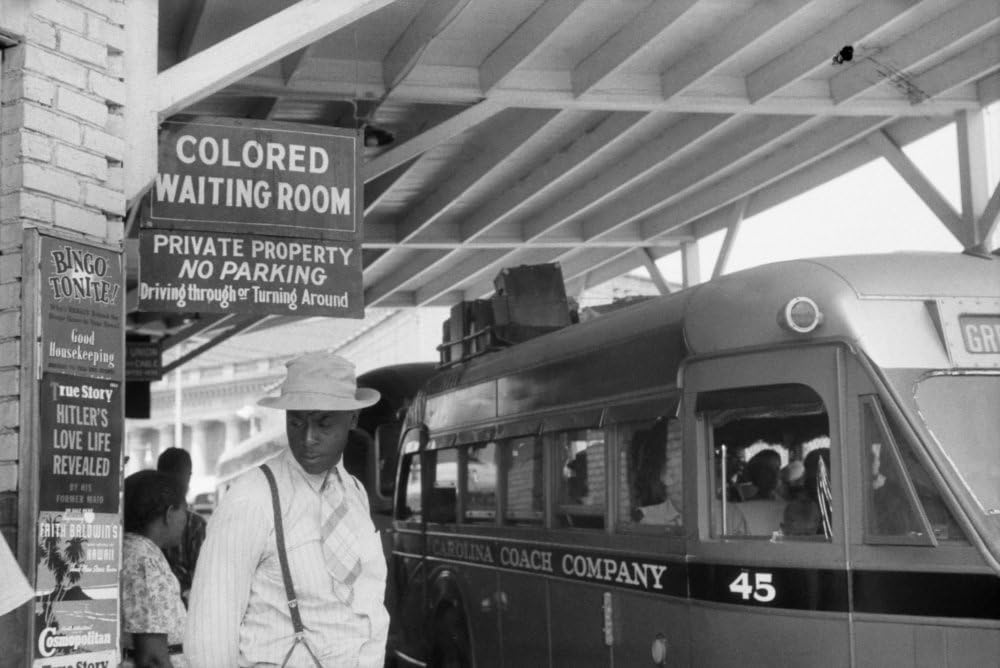
Imagen: «At the bus station in Durham, North Carolina» de Jack Delano
Del Ku Klux Klan solo m’encontré una vez
a un montón de médicos jóvenes de Baltimore
qu’una noche intentaron atraparme y llevarme a la Facultá de Medicina
pa experimentar conmigo. Vi que m’estaban esperando y volví corriendo a casa.
Tenían el yeso listo pa tirármelo en la boca. Sí, señor.
Cornelius Garner (antiguo esclavo, Virginia), entrevistado por Emmy Wilson y Claude W. Anderson, el 18 de mayo de 1973.
(Weevils in the Wheat, 1976: 102)
Mi llegada a Durham tiene lugar una tarde abrasadora de agosto en 1937. Estoy aquí por trabajo con el Proyecto Federal de Escritores, que me ha encomendado la tarea de entrevistar a antiguos esclavos, para recopilar sus historias, recuerdos y costumbres, puesto que esa generación muere día tras día y pronto llegará a su fin.
Asegurarse un alojamiento conlleva las dificultades de siempre, visto que las leyes Jim Crow están tan desenfrenadas en esta ciudad como en cualquier otra del sur. Por experiencia propia, puedo asegurar que si hay algo que le guste menos a un sureño que un hombre de color, es uno con estudios y conocimientos.
El propietario del Motel Chanford me informa de que no «alquila habitaciones a negros», acompañado de más invectivas seguidas de una lluvia de saliva y tabaco de mascar acre. Me limpio los detritus de los anteojos y salgo del establecimiento, nada sorprendido.
Después de investigar un poco, consigo asegurarme un alojamiento por la ciudad en la casa de un carnicero de color, un hombre achaparrado cual yunque y con brazos acordes a su profesión. Se pone a trabajar mientras regateamos, cortando un codillo de carne con una hachuela ancha y separando hábilmente la carne del hueso con un cuchillo fino.
—Bueno, pues yo le acojo. Señor Bisset, ¿verdad? Pero la comida la va a tener que conseguir en otro lao. Mama Elsa está justo haciendo esquina. De las mejores comidas que va a probar por aquí. A no ser que le guste la carne poco hecha.
Ríe por lo bajo y se limpia las manazas en el delantal, dejando unas manchas sangrientas, antes de hacerme subir unas escaleras laterales. La habitación está limpia, pero es espartana: una cama pequeña, un armario y una ventana que da a un callejón.
—Puede ir y venir como le plazca. Pero va a tener que aguantar el olor, cuando esté trabajando. —Olfateo subrepticiamente el aire, donde un aroma a cobre se me mete en cada poro y grieta.
»¿Y qué dice? ¿Que es escritor? —Mueve los ojos para examinarme las manos flexibles—. ¿Y que está aquí pa preguntarle a los viejos por los tiempos de la esclavitud? ¿El gobierno les paga a los de color pa eso?
Le explico que muchos de los ancianos negros se muestran reacios con los entrevistadores blancos. La Administración para el Progreso de las Obras espera que los hombres y las mujeres de color como yo podamos aliviar su obstinación.
Se ríe:
—El presidente Roosevelt hace trabajos pa tos. ¿Y qué espera averiguar de los tiempos de la esclavitud? ¿Que los blancos llevaban dentro tanto del diablo como ahora?
Intercambiamos una sonrisa cómplice antes de que se marche, esa que une a la raza de color de todas las regiones y castas debido a nuestro saber sagrado y nuestras verdades no escritas sobre las costumbres de los blancos.
Cuando se va, abro mis maletas, extiendo la ropa y saco un libro de cuero que pongo bajo el colchón. Luego salgo a cenar.
Tal como prometió el carnicero, Mama Elsa (una madre de familia que es una maravilla en la cocina) me proporciona una comida exquisita de la gastronomía negra sureña. Una vez averigua que soy del norte, se sienta a hablar conmigo con unas jarras de té helado y bizcocho de pasas, y me sugiere dónde podría encontrar a ancianos negros que recuerden la esclavitud. Cuando vuelvo a mi habitación, organizo los planes para el día siguiente, apago las luces y me retiro.
Me despierto pasadas las dos de la madrugada.
Escojo un traje blanco de entre mis pertenencias: chaqueta, chaleco y pantalones con calcetines blancos y zapatos blancos. Ya vestido, agarro una bolsa de tela a juego y bajo por el pasillo lateral hasta salir al exterior. Tiro de mi bombín blanco hacia abajo para mantenerlo en su sitio y me adentro en la apacible noche de Durham, manteniéndome alejado de las calles principales y permaneciendo oculto tras los edificios y las sombras hasta llegar a mi destino. Cuando llamo a la puerta con una mano enguantada de blanco, el rostro del hombre que me recibe parece confundido. Quizá porque le han despertado. O por la imagen que tiene ante sí de un negro alto vestido de blanco con mascarilla de cirujano.
El borrón plateado traza una línea limpia a través de la garganta del hombre, rociando de gotitas carmesíes el delantal blanco con el que me he cubierto la ropa diligentemente. Se aferra a la herida, y la conmoción y el dolor le desfiguran los rasgos afilados. No intenta gritar, aunque tampoco es que pueda con la tráquea cercenada. En lugar de eso, intenta retener el fluido que le chorrea por las manos, tambaleándose hacia atrás y derribando un pequeño taburete al caer. Lo sigo y cierro la puerta a mis espaldas.
El propietario del Motel Chanford está tendido en la alfombra arrugada, pataleando con las piernas desnudas bajo una bata azul. Enderezo el taburete, me siento y observo. El desdén que antes inundaba esos ojos grises, cuando me insultó a la cara, ha desaparecido. Ahora solo hay miedo, en una mirada que se fija exclusivamente en mí como si me hubiera convertido en su mundo entero. Es un terror animal, incapaz de apartar la vista del depredador que lo ha capturado. Me observa mientras extraigo un fardo de tela de la bolsa, extendiéndolo sobre el suelo. Los instrumentos plateados en su interior son afilados, hechos para cortar y rebanar. Los recorro con el dedo y me viene a la mente lo parecidos que son los utensilios de un cirujano y los de un carnicero.
Un gorgoteo húmedo sale del espécimen tendido ante mí, un intento fallido de hablar con el cartílago destrozado. Me imagino que se pregunta por qué, así que le respondo.
—Tal vez pienses que me estoy vengando por el encuentro descortés que hemos tenido previamente. Pero te aseguro que no se trata de nada tan pedestre. —Saco mi libro de cuero y lo abro para enseñarle anotaciones y bocetos—. Verás, soy un hombre curioso en busca de algo. Y me parece que tú puedes ofrecerme unas buenas muestras.
Esos ojos de animal atemorizado permanecen sobre mí mientras le rajo el abdomen al espécimen. Siguen abiertos mucho después de que haya empezado a buscar dentro del hedor a bilis y órganos.
En mi libro, anoto los hallazgos.
Las tres primeras entrevistas que tengo al día siguiente dan pocos resultados. Dos de los negros eran niños a finales de la esclavitud y no recuerdan mucho. El tercero tiene la mente tan perdida que no hace más que mirarme fijamente.
Es la última hora de la tarde cuando llego a casa de la señorita Maddie Shaw, que vive con su nieta en una humilde casucha a las afueras de la ciudad, cerca de unos bosques donde no han llegado la electricidad, el alcantarillado ni las carreteras asfaltadas.
La señorita Shaw asegura tener noventa y siete años. Es el ejemplo perfecto de una persona mayor negra: piel negra, dientes blancos y pelo lanudo. La cara, de frente ancha y mandíbula prognata, refleja un semblante regio que parece descender de las Amazonas de Dahomey. La enfermedad le ata a este lugar y lo gobierna como una kentake del antiguo Meroe. Cuando le cuento por qué he venido, se pone a la defensiva.
—¿Que si puedo hablarle de cuando l’esclavitú? Pos claro, pero no voy a hacerlo. No m’acuerdo ni de la mitá. Y el resto es demasiado espantoso pa contarlo. No hace falta ninguna de que s’entere de lo qu’es agua pasá. ¿Tiene caramelos? Me gustan las cosas dulces y normalmente no consigo.
Cuando se entera de que no tengo caramelos, se aleja de mí con desinterés. Su nieta, más joven que yo (aunque envejecida antinaturalmente por vivir bajo las leyes Jim Crow), es mi salvación. Insiste a la anciana y le dice que he venido para escribir su historia en un libro. La señorita Maddie Shaw se remueve en su trono desvencijado y me observa contemplativa.
—Bueno, pos le voy a contar algo pa que lo ponga en su libro. Pero lo peor, no. ¿Que de dónde vengo? Nací y me crie aquí mismo. Igual que mi mamaíta y mi papaíto, allá cuando to esto era’l terreno de los Payne. ¿Mi antigua señora? La señora Emma Payne. ¿Que cómo me trataba? Pos como trataban las señoras a tos sus esclavos. T’abofeteaba y te daba palizas con las manos y de vez en cuando te daba con una vara hasta dejart’en carne viva. Pero su marido era’l peor, te colgaba de los pulgares en el establo y luego t’azotaba hasta que chorreaba la sangre. ¿Que si pegaba a las mujeres? Pos claro que sí, igual qu’a los hombres. Los domingos nos pegaba desnudas y nos lavaba con salmuera, justo antes d’irse pa l’iglesia.
Tuerce el gesto con amargura.
—No le voy a contar mucho más. No, qué va. No tiene sentido que sepa de tos esos blancos malos. Ya están tos muertos. ¿Estarán en el cielo? ¡Señor, no! No se merecen ni el cielo ni el infierno. ¡Ojalá se los hubieran llevao los Doctores de la Noche!
Esas últimas palabras hacen que un escalofrío me recorra la columna. Dejo a un lado el cuaderno de notas, busco el libro de cuero en mi bolsa y le pido que continúe, intentando contener el entusiasmo.
—¿Los Doctores de la Noche? Ah, qué miedo daban cuando esto era’l terreno de los Payne. Mire, los Doctores de la Noche eran hombres, solo qu’en realidá no eran hombres. Venían por la noche y secuestraban esclavos pa experimentar con ellos. Era mejor levantarte y morirte a que t’atraparan los Doctores de la Noche. Te llevaban hasta donde vivían, una sala de disección blanca y enorme, del tamaño d’una ciudá entera, ¡y te rajaban ahí mismo y t’enseñaban tus entrañas!
La vieja señorita Shaw me lee el rostro como si tuviera runas grabadas, y sonríe al descifrarlas.
—Ah, ya veo qué es lo que le gusta. Usté no quiere escuchar historias sobre esclavos y blancos. Usté quiere historias de fantasmas, brujas y el coco. La vieja Maddie se sabe esas y muchas más. Si vuelve con algo dulce, igual se las cuento.
Con eso, adopta un semblante inexpresivo. A mi vez, guardo el libro y me despido de ella, mientras pensamientos sobre los Doctores de la Noche me rondan la cabeza como susurros.
—¿Los Doctores de la Noche?
Mama Elsa me mira con los ojos entornados por encima del borde escarchado de un tarro de cristal:
—Bueno, ¿y pa qué quiere esas viejas historias?
Le explico que el Proyecto Federal de Escritores está interesado en las tradiciones populares de los antiguos esclavos, y yo comparto un interés particular. Le digo que, de hecho, estoy reuniendo dichas historias para un libro.
Arquea una ceja definida y saca una petaca plana de alguna parte de su voluminoso vestido azafrán para aliñar nuestros tés helados.
—Anda que no tienen ideas raras los escritores. Yo solo sé lo que dicen los más mayores. Se supone que los Doctores de la Noche eran hombres que secuestraban esclavos. Dejaban trampas pa atraparte. Algunos tenían botellas negras llenas de éter o agujas con las que te pinchaban. Otras veces, te ponían yeso por la cara. Experimentaban contigo. ¡Hasta te rajaban mientras seguías vivo!
Le pregunto si cree en esas historias.
—Cuando era pequeña, sí. Nos las contaba mi tita. Ella decía que se las sabía por nuestra abuelita. Qué miedo me daba. Pero ya se me ha pasao. A los Doctores de la Noche se los inventaron los blancos. Eran los mismos amos, ¿eh? Que se disfrazaban y asustaban a los esclavos pa que no se escaparan de las plantaciones.
Asiento pensativo. Los Doctores de la Noche, las Brujas de la Noche, los Jinetes de la Noche, los Hombres de la Botella y los Hombres de la Aguja. La primera vez que oí hablar de la leyenda fue en Washington D.C., en la Facultad de Medicina, donde nos la trasmitieron como una curiosa superstición de los migrantes negros que abundan en la ciudad. Tal como dice Mama Elsa, por lo general se considera que la leyenda surgió con los amos esclavistas. Otros afirman que empezó con la práctica demasiado común de vender cadáveres de esclavos a las facultades de Medicina. Los Doctores de la Noche permanecieron activos con libertad, y algunos confundían al Klan por Doctores «Ku Klux». Las historias son comunes entre los negros por las ciudades del sur: Charleston, Nueva Orleans, Birmingham. Y aunque se cuentan con ligeras variaciones, comparten una continuidad extraordinaria.
—Supongo que pregunta por esos Doctores de la Noche por lo que ha estao pasando aquí en Durham —dice Mama Elsa.
Finjo desconcierto, y ella se inclina hacia delante para susurrarme:
—¡Es la comidilla de la ciudad! Han encontrao a cuatro blancos muertos en la última semana. Los rajaron y luego los cosieron, ¡como si alguien les hubiera sacao las entrañas y luego se las hubiera vuelto a meter!
Abro mucho los ojos para igualar su alarma y le pregunto si han arrestado a alguien. Niega con la cabeza.
—No tienen ni idea de quién lo ha hecho. Pero dicen que tiene que haber sío algún tipo de médico. Están buscando entre los blancos que trabajan en el hospital.
Le doy un sorbo a mi bebida. Estaba claro que, en Durham, se esperaría que el culpable fuera blanco. De los negros se sospechaban bastantes delitos… robos, atracos, violaciones e incluso asesinatos casuales. Pero nada así. Nada que requiriese tal habilidad.
Si alguien se hubiera molestado en mirar, habría encontrado un patrón en los especímenes. El dueño de un negocio que le dio una paliza a un niño de color de doce años, por la ofensa de no quitarse el sombrero en presencia de un blanco. El abogado de oficio que conspiró para someter a sus clientes a trabajos forzosos. El viejo carpintero que presumió abiertamente de haber ayudado a quemar vivo a un negro. El hilo que los unía se extraía de los cuchicheos que se recopilaban en espacios como el de Mama Elsa, de los muchos pecados de esta ciudad… como los de todas. Debería haber sido fácil de ver, pero se volvía tan invisible como los crímenes que habían cometido cada uno de ellos.
—Estos asesinatos han hecho que empiece a hablarse de los Doctores de la Noche —siguió Mama Elsa—. Algunos dicen que hasta han visto a un hombre de blanco merodeando de noche por los callejones.
Le recuerdo que ya no cree en esas cosas. Me devuelve una sonrisa irónica:
—Está en lo que uno cree, señor Bisset, y luego está lo que le da miedo. —Hace una pausa—. Cuando éramos unos chiquillos nos sabíamos una canción sobre los Doctores de la Noche.
Abre bien los ojos y pone una voz ronca de vieja cuentacuentos que hipnotiza a los miembros del clan en torno al fuego:
¿Ves esa casa? ¿Esa gran casa blanca?
¿Donde terminan los caminos?
¡Allí metían a los muertos antes
en sábanas blancas envueltos!
Y si en ese muerto un negro pensaba,
parao en frente de la puerta,
¡llegaban los Doctores de la Noche
y le daban en la cabeza!
Tiraban del pobre negrito muerto
a la sala de disección
pa investigarle el hígado y la hiel, luces;
y tol buche a continuación.
Le quitaban las manos y los pies,
ojos, cabeza, y lo demás,
y cuando terminaron los doctores
¡entonces no quedó na más!
Termina con una carcajada:
—¡Igual puede escribir un libro sobre eso!
—Tal vez lo haga —respondo. Y le doy un sorbo al té.
“De only Ku Klux I ever bumped into was a passel o’ young Baltimore Doctors tryin’ to ketch me one night an’ take me to de medicine college to ’periment on me. I seed dem a laying’ fer me an’ I run back into de house. Dey had a plaster all ready for to slap on my mouf. Yessuh.”
—Cornelius Garner (ex-slave, Virginia), interview by Emmy Wilson and Claude W. Anderson, May 18, 1937.
(Weevils in the Wheat, 1976: 102)
My arrival in Durham comes on a sweltering August afternoon in 1937. I am here on work with the Federal Writers’ Project, tasked to conduct interviews of former slaves, to collect their stories, memories, and folkways, as that generation is daily dying out and will soon reach its end.
Securing lodgings comes with its usual difficulties, as Jim Crowism is as rampant in this city as any other in the South. From experience, I can assure that if there is anything a Southerner dislikes more than a colored man it is one who shows education and learning.
The proprietor of the local Chanford Motel informs me that he does not “rent rooms to niggers” with further invectives followed by a hail of saliva and pungent chewing tobacco. I wipe the detritus from my spectacles and leave the establishment, not altogether surprised.
After some investigation, I am able to secure lodgings in the city at the place of a colored butcher, a squat anvil of a man with arms suited to his profession. He tends to his work while we haggle, hacking at a knuckle of meat with a wide hog splitter and cleanly slicing flesh from bone with a thin knife.
“Well, I’ll take you on. Mr. Bisset, is it? Gonna have to get yer food someplace else tho’. Mama Elsa’s just round the corner. One of the finest meals you’ll ever have in town. ’Less you like yer meat rare.”
He chuckles, wiping his apron with ham-fisted, bloody smears before showing me up some side stairs. The room is clean but spartan: a small bed, a closet, and a window that opens to an alley.
“You can comes and goes as you please. Gonna have to put up with the smell tho’, when I’m butchering.” I surreptitiously sniff the air, where a coppery scent seeps into every pore and crevice.
“You say you a writer?” His eyes move to appraise my supple hands. “And you here to ask old folk ’bout slavery times? Government pay colored men for that?”
I explain that many of the old Negroes prove reluctant with white interviewers. The Works Progress Administration hopes that colored men and women such as myself can alleviate their recalcitrance.
He laughs. “President Roosevelt makin’ a job for everybody. And what you thinkin’ to find out ’bout slavery times? That white folk had as much of the devil in ’em then as now?”
We share a knowing smile before he departs—the one that unites the colored race across region and caste in our sacred knowledge and unwritten scriptures on the ways of white folk.
When he’s gone, I open my suitcases, laying out my clothes and removing a leather book that I place beneath the mattress. Then I set out for dinner.
True to the butcher’s words, Mama Elsa (a matronly woman who is a wonder in the kitchen) provides me with a fine meal of the Southern Negro variety. Learning I am from the North, she sits to talk with me over jars of iced tea and raisin cake, suggesting where I might find older Negroes who remember slavery. When I return to my room, I plot out my plans for the next day, turn down the lights, and retire.
I wake up sometime after two a.m.
I pick out a white suit from my belongings: a full jacket, vest, and pants with white socks and white shoes. Fully dressed, I grab up a matching cloth bag and make my way down the side passage of the butchery until I step outside. Pulling a white bowler down to keep it firm, I enter into Durham’s still night, keeping from the main roads and remaining hidden behind buildings and shadows until reaching my destination. When I rap on the door with a white-gloved hand, the face of the man that greets me looks confused. Perhaps from being roused from sleep. Or at the sight of a tall Negro man dressed in white, wearing a surgeon’s mask.
The blur of silver cuts a clean line across the man’s throat, spraying bits of crimson onto the white apron I assiduously placed over my wears. He clutches the open wound, shock and pain marring his sharp features. He does not try to scream, not that he can, with the severed trachea. Instead he tries to hold in the fluid that leaks over his hands, staggering back and knocking over a small stool as he falls. I follow and close the door behind me.
The proprietor of the Chanford Motel lies on a disheveled rug, his bare legs kicking from beneath a blue robe. Righting the stool, I seat myself and watch. The condescension that had once filled those gray eyes, when he’d earlier hurled slurs in my face, is gone. There is only fear now, in a gaze that is fixed singly on me as if I have become his whole world. It is an animal’s terror—unable to look away from the predator that has captured it. He watches as I remove a cloth bundle from my bag, spreading it upon the floor. The silver instruments within are sharp, made for cutting and slicing. I run a finger over them and am reminded how similar a surgeon’s tools are to a butcher’s.
A wet gurgling comes from the specimen laid out before me—a failed attempt to speak through ruined cartilage. I imagine it is asking why, so I answer.
“You may think this is vengeance for our earlier uncivil encounter. But I can assure it is nothing so base.” I draw out my leather book, opening it to show notations and sketches. “I’m a curious man, you see, looking for something. And you, I believe, offer a fine sampling.”
Those panic-stricken animal eyes remain on me as I cut open the specimen’s abdomen. They stay open long after I begin my search within the reek of bile and organs.
In my book, I jot down my findings.
My first three interviews the next day yield little result. Two of the Negroes were children at the end of slavery and remember little of it. A third is so addle-minded, he does little more than glare.
It is late afternoon when I arrive at the home of Miss Maddie Shaw, who lives with her granddaughter in a humble shack at the city’s edge, near woods untouched by electricity, plumbing, or paved roads.
Miss Shaw claims to be ninety-seven years of age. She is an ideal illustration of the old Negro type: black skin, white teeth, and woolly hair. Her face, with its wide forehead and prognathous jaw, bears a regal countenance that looks descended from the Amazons of Dahomey. She is bound to this place by infirmity and lords over it like a Kentake of old Meroe. When I tell her why I’ve come, she is guarded.
“Can I tell yer ’bout slavery days? Sho’, but I ain’t going to. Most of it I can’t remember. And the rest’s too awful to tell. Don’t need to know all that old talk no how. You got sweeties? I lak sweet things and don’t get dem too often.”
At learning I have no sweets, she turns away from me with disinterest. Her granddaughter, younger than myself (though aged unnaturally by a life under Jim Crowism), is my savior. She prods the elder, telling her I’ve come to put her story into a book. Miss Maddie Shaw shifts in her rickety throne and eyes me contemplatively.
“Well, I’ll tell yer some to put down in yer book. But not the worse. Where I’m from? Was born and raised right here. Same as my mammy and pappy, back when dis was all Payne land. My ol’ missus? Dat be Miss Emma Payne. How she treat me? Lak a missus treat all her slaves. She’d slap and beat you wit’ her hands and every now and den take to you wit’ a switch till you raw. But her husband was the tough one, hang you up by the thumbs in the barn and den whup you till the blood run. Did he beat women? Why sure he beat dem, jes’ lak men. Beat us naked and washed us down in brine on Sundays, right fore he gon’ to church.”
She makes a bitter face.
“I ain’t gon tell yer much more. No, I ain’t. No sense for yer to know ’bout all dose mean white folk. Dey all daid now. Is dey in heaven? Lord no! Dey don’t deserve heaven nor hell. Wish the Night Doctors had took ’em!”
Those last words jolt my spine. Setting aside my writing pad, I reach into my bag for my leather book and bid her to continue, trying to hold back my eagerness.
“Night Doctors? Oh, dey was a fright round here back’n when dis was Payne land. Night Doctors was men, you see, only dey was not men. Used to come round at night and snatch away slaves to ’speriment on. Best you up and die ’fore the Night Doctors git you. Dey take you to where dey stay, a great white dissectin’ hall, big as a whole city, and cut you open right dere and show you all yer insides!”
Old Miss Shaw reads my face as if it were etched with runes, and grins at deciphering them.
“Oh, I sees what you lak. Ain’t stories ’bout slaves and white folk you want to hear. It’s stories ’bout haints and witches, raw head and bloody bones. Old Maddie knows dem stories and better. You come back wit’ sumtin sweet, might jes’ tell you more.”
With that, her face closes. I shut my book in turn and bid her farewell, thoughts of Night Doctors whispering in my head.
“Night Doctors?”
Mama Elsa squints at me over the frosted rim of a mason jar. “Now what you want with them ol’ stories?”
I explain that the Federal Writer’s Project is interested in the folkways of ex-slaves, and I share a particular interest. In fact, I tell her, I am collecting such stories for a book.
She raises a sculpted eyebrow and removes a flat tin flask from somewhere in her voluminous saffron dress to top off our iced tea.
“You writer folk sho’ got queer ideas. I just know what the ol’ people say. Night Doctors was supposed to be men what snatched away slaves. They’d leave traps to get you. Some of em’ had black bottles full of ether or needles to prick you with. Other times, they put plaster round yo’ face. They’d experiment on you. Slice you up while you was still alive even!”
I ask if she believes such stories.
“Did when I was little. My auntie used to tell us. Said she heard them from our grandmammy. Used to give me a fright. But I knows better now. Night Doctors was made up by white folks. Was the masters theyselves, you see, dressing up and scarin’ the slaves to keep them from running off the plantations.”
I nod thoughtfully. Night Doctors, Night Witches, Night Riders, Bottle Men, and Needle Men. My first hearing of the tale was back in Washington D.C., in medical school, conveyed to us as a curious superstition of Negro migrants so plentiful in the city. Much as Mama Elsa relates, it’s commonly held that the folklore arose with slave masters. Others claim it began with the all too common practice of selling deceased slaves to medical colleges as cadavers. Night Doctors lingered on with freedom, with some mistaking the Klan for “Ku Klux” Doctors. The stories are common among Negroes throughout the cities of the South: Charleston, New Orleans, Birmingham. And though told with slight variations, they share a remarkable continuity.
“Suppose you asking ’bout these Night Doctors because of what’s been happening here in Durham,” Mama Elsa says.
I work my face into befuddlement, and she leans forward to whisper.
“It’s all folk can talk ’bout! Four white people found dead in the past week. They was cut open and then sewed up—like somebody took they insides out and put it all back in again!”
I round my eyes to match her alarm, asking if they’ve caught anyone. She shakes her head.
“They ain’t know who done it. But they saying it got to be some kind of doctor. They checkin’ all the white folk work up at the hospital.”
I sip from my jar. Of course, in Durham, the culprit would be expected to be white. Negroes were suspected well enough of delinquencies—stealing, robbery, rape, even casual murder. But nothing like this. Nothing that required such skill.
Had anyone cared to look, they would find a pattern to the specimens. The storeowner who viciously beat a colored boy of twelve for the offense of not removing his hat in a white man’s presence. The public defender that conspired to shuffle his clients into chain gangs. The old carpenter who bragged openly of the Negro he once helped burn alive. The thread that connected them was gleaned from the whispered chatter picked up in spaces like Mama Elsa’s, of the many sins of this city—like the others. It should have been easy to see, but was rendered as invisible as the crimes each had committed.
“Them killings done started up talk ’bout Night Doctors,” Mama Elsa went on. “Some saying they even seen a man in white skulkin’ round the back streets at night.”
I remind her that she doesn’t believe in such things anymore. She returns a wry grin. “There’s what you don’t believe in, Mr. Bisset, and then there’s what you ’fraid of.” She pauses. “We used to sing this song ’bout Night Doctors when we was small.” She puts on the wide eyes and hoary voice of an ancient storyteller, mesmerizing her clansmen about the fire:
Yuh see that house? That great white house?
Way yonder down de street?
They used to take dead folks in there
Wrapped in a long white sheet!
An’ sometimes when a nigger did stop,
A-wondering who was dead,
Them Night Doctors would come along
An’ bat him on the head!
An’ drag that poor dead nigger chile
Right in they dissectin’ hall
To investigate his liver, lights—
His gizzard and his gall.
Take off dat nigger’s hands an’ feet—
His eyes, his head, an’all,
An’ when them doctors finish up
They wasn’t nothin’ left at all!
She finishes with a whoop of laughter. “Maybe you can write a book bout that!”
“Perhaps I will,” I answer. And I sip my tea.
Fuente: Clark, Phenderson Djèlí (2020): “Night Doctors”, Nightmare Magazine.
“De only Ku Klux I ever bumped into was a passel o’ young Baltimore Doctors tryin’ to ketch me one night an’ take me to de medicine college to ’periment on me. I seed dem a laying’ fer me an’ I run back into de house. Dey had a plaster all ready for to slap on my mouf. Yessuh.”
—Cornelius Garner (ex-slave, Virginia), interview by Emmy Wilson and Claude W. Anderson, May 18, 1937.
(Weevils in the Wheat, 1976: 102)
My arrival in Durham comes on a sweltering August afternoon in 1937. I am here on work with the Federal Writers’ Project, tasked to conduct interviews of former slaves, to collect their stories, memories, and folkways, as that generation is daily dying out and will soon reach its end.
Securing lodgings comes with its usual difficulties, as Jim Crowism is as rampant in this city as any other in the South. From experience, I can assure that if there is anything a Southerner dislikes more than a colored man it is one who shows education and learning.
The proprietor of the local Chanford Motel informs me that he does not “rent rooms to niggers” with further invectives followed by a hail of saliva and pungent chewing tobacco. I wipe the detritus from my spectacles and leave the establishment, not altogether surprised.
After some investigation, I am able to secure lodgings in the city at the place of a colored butcher, a squat anvil of a man with arms suited to his profession. He tends to his work while we haggle, hacking at a knuckle of meat with a wide hog splitter and cleanly slicing flesh from bone with a thin knife.
“Well, I’ll take you on. Mr. Bisset, is it? Gonna have to get yer food someplace else tho’. Mama Elsa’s just round the corner. One of the finest meals you’ll ever have in town. ’Less you like yer meat rare.”
He chuckles, wiping his apron with ham-fisted, bloody smears before showing me up some side stairs. The room is clean but spartan: a small bed, a closet, and a window that opens to an alley.
“You can comes and goes as you please. Gonna have to put up with the smell tho’, when I’m butchering.” I surreptitiously sniff the air, where a coppery scent seeps into every pore and crevice.
“You say you a writer?” His eyes move to appraise my supple hands. “And you here to ask old folk ’bout slavery times? Government pay colored men for that?”
I explain that many of the old Negroes prove reluctant with white interviewers. The Works Progress Administration hopes that colored men and women such as myself can alleviate their recalcitrance.
He laughs. “President Roosevelt makin’ a job for everybody. And what you thinkin’ to find out ’bout slavery times? That white folk had as much of the devil in ’em then as now?”
We share a knowing smile before he departs—the one that unites the colored race across region and caste in our sacred knowledge and unwritten scriptures on the ways of white folk.
When he’s gone, I open my suitcases, laying out my clothes and removing a leather book that I place beneath the mattress. Then I set out for dinner.
True to the butcher’s words, Mama Elsa (a matronly woman who is a wonder in the kitchen) provides me with a fine meal of the Southern Negro variety. Learning I am from the North, she sits to talk with me over jars of iced tea and raisin cake, suggesting where I might find older Negroes who remember slavery. When I return to my room, I plot out my plans for the next day, turn down the lights, and retire.
I wake up sometime after two a.m.
I pick out a white suit from my belongings: a full jacket, vest, and pants with white socks and white shoes. Fully dressed, I grab up a matching cloth bag and make my way down the side passage of the butchery until I step outside. Pulling a white bowler down to keep it firm, I enter into Durham’s still night, keeping from the main roads and remaining hidden behind buildings and shadows until reaching my destination. When I rap on the door with a white-gloved hand, the face of the man that greets me looks confused. Perhaps from being roused from sleep. Or at the sight of a tall Negro man dressed in white, wearing a surgeon’s mask.
The blur of silver cuts a clean line across the man’s throat, spraying bits of crimson onto the white apron I assiduously placed over my wears. He clutches the open wound, shock and pain marring his sharp features. He does not try to scream, not that he can, with the severed trachea. Instead he tries to hold in the fluid that leaks over his hands, staggering back and knocking over a small stool as he falls. I follow and close the door behind me.
The proprietor of the Chanford Motel lies on a disheveled rug, his bare legs kicking from beneath a blue robe. Righting the stool, I seat myself and watch. The condescension that had once filled those gray eyes, when he’d earlier hurled slurs in my face, is gone. There is only fear now, in a gaze that is fixed singly on me as if I have become his whole world. It is an animal’s terror—unable to look away from the predator that has captured it. He watches as I remove a cloth bundle from my bag, spreading it upon the floor. The silver instruments within are sharp, made for cutting and slicing. I run a finger over them and am reminded how similar a surgeon’s tools are to a butcher’s.
A wet gurgling comes from the specimen laid out before me—a failed attempt to speak through ruined cartilage. I imagine it is asking why, so I answer.
“You may think this is vengeance for our earlier uncivil encounter. But I can assure it is nothing so base.” I draw out my leather book, opening it to show notations and sketches. “I’m a curious man, you see, looking for something. And you, I believe, offer a fine sampling.”
Those panic-stricken animal eyes remain on me as I cut open the specimen’s abdomen. They stay open long after I begin my search within the reek of bile and organs.
In my book, I jot down my findings.
My first three interviews the next day yield little result. Two of the Negroes were children at the end of slavery and remember little of it. A third is so addle-minded, he does little more than glare.
It is late afternoon when I arrive at the home of Miss Maddie Shaw, who lives with her granddaughter in a humble shack at the city’s edge, near woods untouched by electricity, plumbing, or paved roads.
Miss Shaw claims to be ninety-seven years of age. She is an ideal illustration of the old Negro type: black skin, white teeth, and woolly hair. Her face, with its wide forehead and prognathous jaw, bears a regal countenance that looks descended from the Amazons of Dahomey. She is bound to this place by infirmity and lords over it like a Kentake of old Meroe. When I tell her why I’ve come, she is guarded.
“Can I tell yer ’bout slavery days? Sho’, but I ain’t going to. Most of it I can’t remember. And the rest’s too awful to tell. Don’t need to know all that old talk no how. You got sweeties? I lak sweet things and don’t get dem too often.”
At learning I have no sweets, she turns away from me with disinterest. Her granddaughter, younger than myself (though aged unnaturally by a life under Jim Crowism), is my savior. She prods the elder, telling her I’ve come to put her story into a book. Miss Maddie Shaw shifts in her rickety throne and eyes me contemplatively.
“Well, I’ll tell yer some to put down in yer book. But not the worse. Where I’m from? Was born and raised right here. Same as my mammy and pappy, back when dis was all Payne land. My ol’ missus? Dat be Miss Emma Payne. How she treat me? Lak a missus treat all her slaves. She’d slap and beat you wit’ her hands and every now and den take to you wit’ a switch till you raw. But her husband was the tough one, hang you up by the thumbs in the barn and den whup you till the blood run. Did he beat women? Why sure he beat dem, jes’ lak men. Beat us naked and washed us down in brine on Sundays, right fore he gon’ to church.”
She makes a bitter face.
“I ain’t gon tell yer much more. No, I ain’t. No sense for yer to know ’bout all dose mean white folk. Dey all daid now. Is dey in heaven? Lord no! Dey don’t deserve heaven nor hell. Wish the Night Doctors had took ’em!”
Those last words jolt my spine. Setting aside my writing pad, I reach into my bag for my leather book and bid her to continue, trying to hold back my eagerness.
“Night Doctors? Oh, dey was a fright round here back’n when dis was Payne land. Night Doctors was men, you see, only dey was not men. Used to come round at night and snatch away slaves to ’speriment on. Best you up and die ’fore the Night Doctors git you. Dey take you to where dey stay, a great white dissectin’ hall, big as a whole city, and cut you open right dere and show you all yer insides!”
Old Miss Shaw reads my face as if it were etched with runes, and grins at deciphering them.
“Oh, I sees what you lak. Ain’t stories ’bout slaves and white folk you want to hear. It’s stories ’bout haints and witches, raw head and bloody bones. Old Maddie knows dem stories and better. You come back wit’ sumtin sweet, might jes’ tell you more.”
With that, her face closes. I shut my book in turn and bid her farewell, thoughts of Night Doctors whispering in my head.
“Night Doctors?”
Mama Elsa squints at me over the frosted rim of a mason jar. “Now what you want with them ol’ stories?”
I explain that the Federal Writer’s Project is interested in the folkways of ex-slaves, and I share a particular interest. In fact, I tell her, I am collecting such stories for a book.
She raises a sculpted eyebrow and removes a flat tin flask from somewhere in her voluminous saffron dress to top off our iced tea.
“You writer folk sho’ got queer ideas. I just know what the ol’ people say. Night Doctors was supposed to be men what snatched away slaves. They’d leave traps to get you. Some of em’ had black bottles full of ether or needles to prick you with. Other times, they put plaster round yo’ face. They’d experiment on you. Slice you up while you was still alive even!”
I ask if she believes such stories.
“Did when I was little. My auntie used to tell us. Said she heard them from our grandmammy. Used to give me a fright. But I knows better now. Night Doctors was made up by white folks. Was the masters theyselves, you see, dressing up and scarin’ the slaves to keep them from running off the plantations.”
I nod thoughtfully. Night Doctors, Night Witches, Night Riders, Bottle Men, and Needle Men. My first hearing of the tale was back in Washington D.C., in medical school, conveyed to us as a curious superstition of Negro migrants so plentiful in the city. Much as Mama Elsa relates, it’s commonly held that the folklore arose with slave masters. Others claim it began with the all too common practice of selling deceased slaves to medical colleges as cadavers. Night Doctors lingered on with freedom, with some mistaking the Klan for “Ku Klux” Doctors. The stories are common among Negroes throughout the cities of the South: Charleston, New Orleans, Birmingham. And though told with slight variations, they share a remarkable continuity.
“Suppose you asking ’bout these Night Doctors because of what’s been happening here in Durham,” Mama Elsa says.
I work my face into befuddlement, and she leans forward to whisper.
“It’s all folk can talk ’bout! Four white people found dead in the past week. They was cut open and then sewed up—like somebody took they insides out and put it all back in again!”
I round my eyes to match her alarm, asking if they’ve caught anyone. She shakes her head.
“They ain’t know who done it. But they saying it got to be some kind of doctor. They checkin’ all the white folk work up at the hospital.”
I sip from my jar. Of course, in Durham, the culprit would be expected to be white. Negroes were suspected well enough of delinquencies—stealing, robbery, rape, even casual murder. But nothing like this. Nothing that required such skill.
Had anyone cared to look, they would find a pattern to the specimens. The storeowner who viciously beat a colored boy of twelve for the offense of not removing his hat in a white man’s presence. The public defender that conspired to shuffle his clients into chain gangs. The old carpenter who bragged openly of the Negro he once helped burn alive. The thread that connected them was gleaned from the whispered chatter picked up in spaces like Mama Elsa’s, of the many sins of this city—like the others. It should have been easy to see, but was rendered as invisible as the crimes each had committed.
“Them killings done started up talk ’bout Night Doctors,” Mama Elsa went on. “Some saying they even seen a man in white skulkin’ round the back streets at night.”
I remind her that she doesn’t believe in such things anymore. She returns a wry grin. “There’s what you don’t believe in, Mr. Bisset, and then there’s what you ’fraid of.” She pauses. “We used to sing this song ’bout Night Doctors when we was small.” She puts on the wide eyes and hoary voice of an ancient storyteller, mesmerizing her clansmen about the fire:
Yuh see that house? That great white house?
Way yonder down de street?
They used to take dead folks in there
Wrapped in a long white sheet!
An’ sometimes when a nigger did stop,
A-wondering who was dead,
Them Night Doctors would come along
An’ bat him on the head!
An’ drag that poor dead nigger chile
Right in they dissectin’ hall
To investigate his liver, lights—
His gizzard and his gall.
Take off dat nigger’s hands an’ feet—
His eyes, his head, an’all,
An’ when them doctors finish up
They wasn’t nothin’ left at all!
She finishes with a whoop of laughter. “Maybe you can write a book bout that!”
“Perhaps I will,” I answer. And I sip my tea.
Del Ku Klux Klan solo m’encontré una vez
a un montón de médicos jóvenes de Baltimore
qu’una noche intentaron atraparme y llevarme a la Facultá de Medicina
pa experimentar conmigo. Vi que m’estaban esperando y volví corriendo a casa.
Tenían el yeso listo pa tirármelo en la boca. Sí, señor.
Cornelius Garner (antiguo esclavo, Virginia), entrevistado por Emmy Wilson y Claude W. Anderson, el 18 de mayo de 1973.
(Weevils in the Wheat, 1976: 102)
Mi llegada a Durham tiene lugar una tarde abrasadora de agosto en 1937. Estoy aquí por trabajo con el Proyecto Federal de Escritores, que me ha encomendado la tarea de entrevistar a antiguos esclavos, para recopilar sus historias, recuerdos y costumbres, puesto que esa generación muere día tras día y pronto llegará a su fin.
Asegurarse un alojamiento conlleva las dificultades de siempre, visto que las leyes Jim Crow están tan desenfrenadas en esta ciudad como en cualquier otra del sur. Por experiencia propia, puedo asegurar que si hay algo que le guste menos a un sureño que un hombre de color, es uno con estudios y conocimientos.
El propietario del Motel Chanford me informa de que no «alquila habitaciones a negros», acompañado de más invectivas seguidas de una lluvia de saliva y tabaco de mascar acre. Me limpio los detritus de los anteojos y salgo del establecimiento, nada sorprendido.
Después de investigar un poco, consigo asegurarme un alojamiento por la ciudad en la casa de un carnicero de color, un hombre achaparrado cual yunque y con brazos acordes a su profesión. Se pone a trabajar mientras regateamos, cortando un codillo de carne con una hachuela ancha y separando hábilmente la carne del hueso con un cuchillo fino.
—Bueno, pues yo le acojo. Señor Bisset, ¿verdad? Pero la comida la va a tener que conseguir en otro lao. Mama Elsa está justo haciendo esquina. De las mejores comidas que va a probar por aquí. A no ser que le guste la carne poco hecha.
Ríe por lo bajo y se limpia las manazas en el delantal, dejando unas manchas sangrientas, antes de hacerme subir unas escaleras laterales. La habitación está limpia, pero es espartana: una cama pequeña, un armario y una ventana que da a un callejón.
—Puede ir y venir como le plazca. Pero va a tener que aguantar el olor, cuando esté trabajando. —Olfateo subrepticiamente el aire, donde un aroma a cobre se me mete en cada poro y grieta.
»¿Y qué dice? ¿Que es escritor? —Mueve los ojos para examinarme las manos flexibles—. ¿Y que está aquí pa preguntarle a los viejos por los tiempos de la esclavitud? ¿El gobierno les paga a los de color pa eso?
Le explico que muchos de los ancianos negros se muestran reacios con los entrevistadores blancos. La Administración para el Progreso de las Obras espera que los hombres y las mujeres de color como yo podamos aliviar su obstinación.
Se ríe:
—El presidente Roosevelt hace trabajos pa tos. ¿Y qué espera averiguar de los tiempos de la esclavitud? ¿Que los blancos llevaban dentro tanto del diablo como ahora?
Intercambiamos una sonrisa cómplice antes de que se marche, esa que une a la raza de color de todas las regiones y castas debido a nuestro saber sagrado y nuestras verdades no escritas sobre las costumbres de los blancos.
Cuando se va, abro mis maletas, extiendo la ropa y saco un libro de cuero que pongo bajo el colchón. Luego salgo a cenar.
Tal como prometió el carnicero, Mama Elsa (una madre de familia que es una maravilla en la cocina) me proporciona una comida exquisita de la gastronomía negra sureña. Una vez averigua que soy del norte, se sienta a hablar conmigo con unas jarras de té helado y bizcocho de pasas, y me sugiere dónde podría encontrar a ancianos negros que recuerden la esclavitud. Cuando vuelvo a mi habitación, organizo los planes para el día siguiente, apago las luces y me retiro.
Me despierto pasadas las dos de la madrugada.
Escojo un traje blanco de entre mis pertenencias: chaqueta, chaleco y pantalones con calcetines blancos y zapatos blancos. Ya vestido, agarro una bolsa de tela a juego y bajo por el pasillo lateral hasta salir al exterior. Tiro de mi bombín blanco hacia abajo para mantenerlo en su sitio y me adentro en la apacible noche de Durham, manteniéndome alejado de las calles principales y permaneciendo oculto tras los edificios y las sombras hasta llegar a mi destino. Cuando llamo a la puerta con una mano enguantada de blanco, el rostro del hombre que me recibe parece confundido. Quizá porque le han despertado. O por la imagen que tiene ante sí de un negro alto vestido de blanco con mascarilla de cirujano.
El borrón plateado traza una línea limpia a través de la garganta del hombre, rociando de gotitas carmesíes el delantal blanco con el que me he cubierto la ropa diligentemente. Se aferra a la herida, y la conmoción y el dolor le desfiguran los rasgos afilados. No intenta gritar, aunque tampoco es que pueda con la tráquea cercenada. En lugar de eso, intenta retener el fluido que le chorrea por las manos, tambaleándose hacia atrás y derribando un pequeño taburete al caer. Lo sigo y cierro la puerta a mis espaldas.
El propietario del Motel Chanford está tendido en la alfombra arrugada, pataleando con las piernas desnudas bajo una bata azul. Enderezo el taburete, me siento y observo. El desdén que antes inundaba esos ojos grises, cuando me insultó a la cara, ha desaparecido. Ahora solo hay miedo, en una mirada que se fija exclusivamente en mí como si me hubiera convertido en su mundo entero. Es un terror animal, incapaz de apartar la vista del depredador que lo ha capturado. Me observa mientras extraigo un fardo de tela de la bolsa, extendiéndolo sobre el suelo. Los instrumentos plateados en su interior son afilados, hechos para cortar y rebanar. Los recorro con el dedo y me viene a la mente lo parecidos que son los utensilios de un cirujano y los de un carnicero.
Un gorgoteo húmedo sale del espécimen tendido ante mí, un intento fallido de hablar con el cartílago destrozado. Me imagino que se pregunta por qué, así que le respondo.
—Tal vez pienses que me estoy vengando por el encuentro descortés que hemos tenido previamente. Pero te aseguro que no se trata de nada tan pedestre. —Saco mi libro de cuero y lo abro para enseñarle anotaciones y bocetos—. Verás, soy un hombre curioso en busca de algo. Y me parece que tú puedes ofrecerme unas buenas muestras.
Esos ojos de animal atemorizado permanecen sobre mí mientras le rajo el abdomen al espécimen. Siguen abiertos mucho después de que haya empezado a buscar dentro del hedor a bilis y órganos.
En mi libro, anoto los hallazgos.
Las tres primeras entrevistas que tengo al día siguiente dan pocos resultados. Dos de los negros eran niños a finales de la esclavitud y no recuerdan mucho. El tercero tiene la mente tan perdida que no hace más que mirarme fijamente.
Es la última hora de la tarde cuando llego a casa de la señorita Maddie Shaw, que vive con su nieta en una humilde casucha a las afueras de la ciudad, cerca de unos bosques donde no han llegado la electricidad, el alcantarillado ni las carreteras asfaltadas.
La señorita Shaw asegura tener noventa y siete años. Es el ejemplo perfecto de una persona mayor negra: piel negra, dientes blancos y pelo lanudo. La cara, de frente ancha y mandíbula prognata, refleja un semblante regio que parece descender de las Amazonas de Dahomey. La enfermedad le ata a este lugar y lo gobierna como una kentake del antiguo Meroe. Cuando le cuento por qué he venido, se pone a la defensiva.
—¿Que si puedo hablarle de cuando l’esclavitú? Pos claro, pero no voy a hacerlo. No m’acuerdo ni de la mitá. Y el resto es demasiado espantoso pa contarlo. No hace falta ninguna de que s’entere de lo qu’es agua pasá. ¿Tiene caramelos? Me gustan las cosas dulces y normalmente no consigo.
Cuando se entera de que no tengo caramelos, se aleja de mí con desinterés. Su nieta, más joven que yo (aunque envejecida antinaturalmente por vivir bajo las leyes Jim Crow), es mi salvación. Insiste a la anciana y le dice que he venido para escribir su historia en un libro. La señorita Maddie Shaw se remueve en su trono desvencijado y me observa contemplativa.
—Bueno, pos le voy a contar algo pa que lo ponga en su libro. Pero lo peor, no. ¿Que de dónde vengo? Nací y me crie aquí mismo. Igual que mi mamaíta y mi papaíto, allá cuando to esto era’l terreno de los Payne. ¿Mi antigua señora? La señora Emma Payne. ¿Que cómo me trataba? Pos como trataban las señoras a tos sus esclavos. T’abofeteaba y te daba palizas con las manos y de vez en cuando te daba con una vara hasta dejart’en carne viva. Pero su marido era’l peor, te colgaba de los pulgares en el establo y luego t’azotaba hasta que chorreaba la sangre. ¿Que si pegaba a las mujeres? Pos claro que sí, igual qu’a los hombres. Los domingos nos pegaba desnudas y nos lavaba con salmuera, justo antes d’irse pa l’iglesia.
Tuerce el gesto con amargura.
—No le voy a contar mucho más. No, qué va. No tiene sentido que sepa de tos esos blancos malos. Ya están tos muertos. ¿Estarán en el cielo? ¡Señor, no! No se merecen ni el cielo ni el infierno. ¡Ojalá se los hubieran llevao los Doctores de la Noche!
Esas últimas palabras hacen que un escalofrío me recorra la columna. Dejo a un lado el cuaderno de notas, busco el libro de cuero en mi bolsa y le pido que continúe, intentando contener el entusiasmo.
—¿Los Doctores de la Noche? Ah, qué miedo daban cuando esto era’l terreno de los Payne. Mire, los Doctores de la Noche eran hombres, solo qu’en realidá no eran hombres. Venían por la noche y secuestraban esclavos pa experimentar con ellos. Era mejor levantarte y morirte a que t’atraparan los Doctores de la Noche. Te llevaban hasta donde vivían, una sala de disección blanca y enorme, del tamaño d’una ciudá entera, ¡y te rajaban ahí mismo y t’enseñaban tus entrañas!
La vieja señorita Shaw me lee el rostro como si tuviera runas grabadas, y sonríe al descifrarlas.
—Ah, ya veo qué es lo que le gusta. Usté no quiere escuchar historias sobre esclavos y blancos. Usté quiere historias de fantasmas, brujas y el coco. La vieja Maddie se sabe esas y muchas más. Si vuelve con algo dulce, igual se las cuento.
Con eso, adopta un semblante inexpresivo. A mi vez, guardo el libro y me despido de ella, mientras pensamientos sobre los Doctores de la Noche me rondan la cabeza como susurros.
—¿Los Doctores de la Noche?
Mama Elsa me mira con los ojos entornados por encima del borde escarchado de un tarro de cristal:
—Bueno, ¿y pa qué quiere esas viejas historias?
Le explico que el Proyecto Federal de Escritores está interesado en las tradiciones populares de los antiguos esclavos, y yo comparto un interés particular. Le digo que, de hecho, estoy reuniendo dichas historias para un libro.
Arquea una ceja definida y saca una petaca plana de alguna parte de su voluminoso vestido azafrán para aliñar nuestros tés helados.
—Anda que no tienen ideas raras los escritores. Yo solo sé lo que dicen los más mayores. Se supone que los Doctores de la Noche eran hombres que secuestraban esclavos. Dejaban trampas pa atraparte. Algunos tenían botellas negras llenas de éter o agujas con las que te pinchaban. Otras veces, te ponían yeso por la cara. Experimentaban contigo. ¡Hasta te rajaban mientras seguías vivo!
Le pregunto si cree en esas historias.
—Cuando era pequeña, sí. Nos las contaba mi tita. Ella decía que se las sabía por nuestra abuelita. Qué miedo me daba. Pero ya se me ha pasao. A los Doctores de la Noche se los inventaron los blancos. Eran los mismos amos, ¿eh? Que se disfrazaban y asustaban a los esclavos pa que no se escaparan de las plantaciones.
Asiento pensativo. Los Doctores de la Noche, las Brujas de la Noche, los Jinetes de la Noche, los Hombres de la Botella y los Hombres de la Aguja. La primera vez que oí hablar de la leyenda fue en Washington D.C., en la Facultad de Medicina, donde nos la trasmitieron como una curiosa superstición de los migrantes negros que abundan en la ciudad. Tal como dice Mama Elsa, por lo general se considera que la leyenda surgió con los amos esclavistas. Otros afirman que empezó con la práctica demasiado común de vender cadáveres de esclavos a las facultades de Medicina. Los Doctores de la Noche permanecieron activos con libertad, y algunos confundían al Klan por Doctores «Ku Klux». Las historias son comunes entre los negros por las ciudades del sur: Charleston, Nueva Orleans, Birmingham. Y aunque se cuentan con ligeras variaciones, comparten una continuidad extraordinaria.
—Supongo que pregunta por esos Doctores de la Noche por lo que ha estao pasando aquí en Durham —dice Mama Elsa.
Finjo desconcierto, y ella se inclina hacia delante para susurrarme:
—¡Es la comidilla de la ciudad! Han encontrao a cuatro blancos muertos en la última semana. Los rajaron y luego los cosieron, ¡como si alguien les hubiera sacao las entrañas y luego se las hubiera vuelto a meter!
Abro mucho los ojos para igualar su alarma y le pregunto si han arrestado a alguien. Niega con la cabeza.
—No tienen ni idea de quién lo ha hecho. Pero dicen que tiene que haber sío algún tipo de médico. Están buscando entre los blancos que trabajan en el hospital.
Le doy un sorbo a mi bebida. Estaba claro que, en Durham, se esperaría que el culpable fuera blanco. De los negros se sospechaban bastantes delitos… robos, atracos, violaciones e incluso asesinatos casuales. Pero nada así. Nada que requiriese tal habilidad.
Si alguien se hubiera molestado en mirar, habría encontrado un patrón en los especímenes. El dueño de un negocio que le dio una paliza a un niño de color de doce años, por la ofensa de no quitarse el sombrero en presencia de un blanco. El abogado de oficio que conspiró para someter a sus clientes a trabajos forzosos. El viejo carpintero que presumió abiertamente de haber ayudado a quemar vivo a un negro. El hilo que los unía se extraía de los cuchicheos que se recopilaban en espacios como el de Mama Elsa, de los muchos pecados de esta ciudad… como los de todas. Debería haber sido fácil de ver, pero se volvía tan invisible como los crímenes que habían cometido cada uno de ellos.
—Estos asesinatos han hecho que empiece a hablarse de los Doctores de la Noche —siguió Mama Elsa—. Algunos dicen que hasta han visto a un hombre de blanco merodeando de noche por los callejones.
Le recuerdo que ya no cree en esas cosas. Me devuelve una sonrisa irónica:
—Está en lo que uno cree, señor Bisset, y luego está lo que le da miedo. —Hace una pausa—. Cuando éramos unos chiquillos nos sabíamos una canción sobre los Doctores de la Noche.
Abre bien los ojos y pone una voz ronca de vieja cuentacuentos que hipnotiza a los miembros del clan en torno al fuego:
¿Ves esa casa? ¿Esa gran casa blanca?
¿Donde terminan los caminos?
¡Allí metían a los muertos antes
en sábanas blancas envueltos!
Y si en ese muerto un negro pensaba,
parao en frente de la puerta,
¡llegaban los Doctores de la Noche
y le daban en la cabeza!
Tiraban del pobre negrito muerto
a la sala de disección
pa investigarle el hígado y la hiel, luces;
y tol buche a continuación.
Le quitaban las manos y los pies,
ojos, cabeza, y lo demás,
y cuando terminaron los doctores
¡entonces no quedó na más!
Termina con una carcajada:
—¡Igual puede escribir un libro sobre eso!
—Tal vez lo haga —respondo. Y le doy un sorbo al té.
Irene Santamaría Snyder (Tarifa, 2002) es licenciada en Traducción e Interpretación en la especialidad de inglés e italiano por la Universidad de Granada y Máster de Traducción Literaria en la especialidad de inglés por la Universidad Complutense de Madrid, con un Trabajo Fin de Máster sobre la traducción de la ficción especulativa afroamericana de P. Djèlí Clark. Actualmente sigue persiguiendo su sueño de dedicarse profesionalmente a la traducción literari