
El hada bazuca
Traducción del inglés por Delia Salazar
Texto original de Kuzhali Manickavel
Edición por Laura Lucía Urrea Moreno
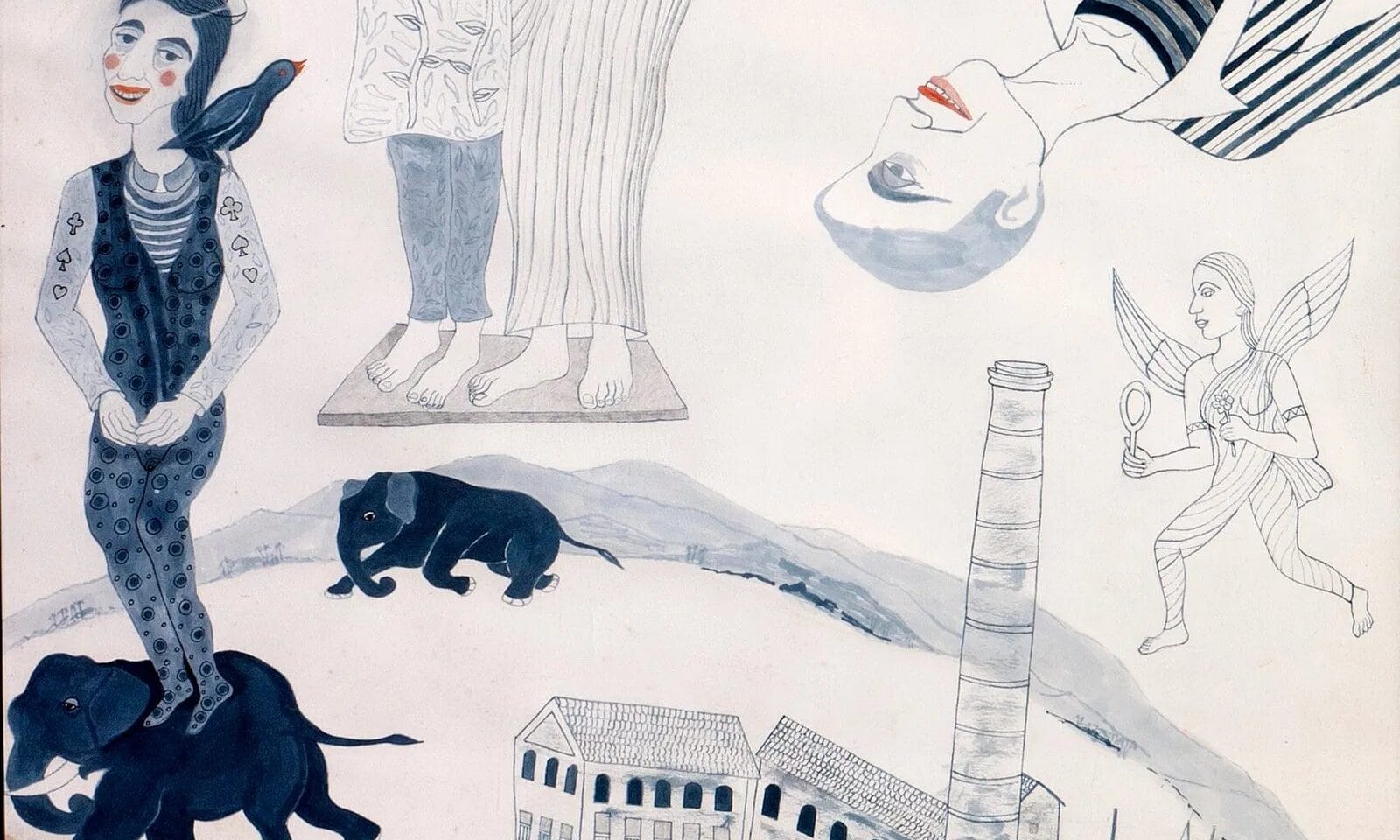
Imagen: Performer Series, acuarela sobre papel de Lalitha Lajmi, 2015
Incluso de niña, Stalin Rani se parecía mucho a un pliego de papel Kraft. Su cuerpo era plano y dúctil y en su rostro había surcos que se encrespaban, cambiando de forma cuando se quedaba de pie bajo el sol. Sus padres celebraron su nacimiento encendiendo cuatro modestos petardos, de los cuales tres nunca llegaron a estallar.
Comenzó su vida gateando pegada a las paredes flácidas de su casa, encajando los deditos de los pies en cada esquina y escuchando a su padre ascender en el escalafón del partido comunista local. Por las tardes, se sentaba bajo una mesa y clasificaba las voces que escuchaba según su forma y su color. Algunas de ellas eran gris oscuro y duras como el cemento húmedo; otras, eran aceitosas y de color cobrizo como el dulce de sémola rancio.
Cuando tenía seis años, un tipo alto y espasmódico al que llamaban Tío Cajeta llegó de Londres a vivir en su casa. Su mandíbula estaba fracturada y llevaba una gasa sucia mal enrollada alrededor de su cara como si fuese una bufanda. Ignoraba por completo la existencia de Stalin Rani y dedicaba la mayor parte de su tiempo a escuchar un radio viejo. Hasta que un día volteó a mirarla.
—Tienes un nombre atroz. ¿Cómo era? Ya lo olvidé.
—Stalin Rani.
—«Reina Stalin», es casi un oxímoron. ¿Sabes qué es un oxímoron?
—No.
—O-xí-mo-ron, un absurdo. ¿Sabes lo que significa moron en inglés? Significa imbécil. Tu padre, por ejemplo, es un absurdo imbécil por haberte puesto ese nombre: Stalin Rani.
—¿De verdad estuviste en Londres?
—¿Por qué? ¡¿Tú sí?!
—¿Cómo era?
—En Londres hay lluvia y hadas de azúcar por todos lados —explicó—. Tienen la piel viscosa y llevan bazucas rosadas de caramelo bajo el brazo. Todos los domingos salía a cazarlas y las guardaba en mi caja de zapatos. Bazucas de azúcar. Dilo: «bazucas de azúcar».
—Bafucas dazucar.
—Hadas de azúcar cargando bazucas. Toma —dijo él, empujando una gruesa caja de zapatos de color negro contra la pancita de Stalin—. Si algún día consigues una, puedes guardarla aquí dentro.
La caja de zapatos olía a madera y miel vieja. Stalin Rani imaginó haditas pequeñas agazapadas en las esquinas, con la piel chorreando entre los dedos de sus pies. Se imaginó que esperaban pacientemente al momento en que se abriera la tapa para dispararle al Tío Cajeta en la mandíbula.
*
La caja de zapatos era una ventana hacia miles de posibilidades y Stalin Rani a menudo pensaba en todas las cosas que podrían estar ahí adentro si se les diera la oportunidad. La visualizó llena por completo de lápices bien afilados de color morado, o de ranas amarillas enmarañadas entre sí por las patas. A veces la imaginaba llena de borradores perfectamente blancos, apilados como ladrillos. Un día, descubrió dentro una pequeña ala.
—¿Esto es de un hada bazuca? —preguntó, sosteniendo la frágil ala sobre la punta de su dedo índice. El Tío Cajeta frunció el entrecejo y sufrió un espasmo.
— Mejor pruébala, para estar seguros.
La niña la colocó sobre su lengua y sintió como un pinchazo amargo que le recorría los dientes.
—¿Se siente como una cucharada de azúcar? —le preguntó.
Ella negó con la cabeza.
—¿Te sientes capaz de decir supercalifragilisticoespialidoso de atrás para adelante?
—No.
—Entonces debe ser un ala de mosca —afirmó el Tío Cajeta.
*
Cuando Stalin Rani despertó la mañana siguiente, vio el universo extenderse cual chicle de naranja frente a sus ojos. Pudo distinguir una fisura en el huevo cósmico, elefantes copulando bajo una tormenta eléctrica y un sanitario dañado. Tosió hasta que algo negro y duro salió disparado de su garganta.
—Es una revelación —exclamó el Tío Cajeta—. Póntela en la boca.
—De ahí salió.
—Entonces ponla en la caja de zapatos que te di —le dijo.
Stalin Rani producía un objeto de esos todas las mañanas. Pronto, su caja estuvo casi llena.
—¿Por qué tú no tienes ni una de estas? —le preguntó.
—Sí tengo, pero no las escupo.
—¿Por qué debo guardarlas en la caja de zapatos? ¿Por qué no las boto y ya?
—Porque todos debemos tener una caja llena de cosas que no entendemos y no podemos tirar.
*
En la caja cabía solo un determinado número de revelaciones. Al final de cada mes, Stalin Rani las llevaba a una cañada cerca de la casa y las dejaba caer una por una. El Tío Cajeta la acompañaba y se quedaba apoyado en la baranda, haciendo sonar el cuello, los nudillos, las muñecas y luego el cuello otra vez.
—Nada más ten cuidado de no golpear a ningún hada —le dijo.
—Pero tú dijiste que solo vivían en Londres —replicó Stalin Rani.
—Tengo la impresión de haberme traído algunas conmigo. Sentí algo halándome el cabello cuando estaba en el avión.
—Piojos.
—No eran piojos.
—Hay una niña en mi escuela, Mahalakshmi, que tenía tantos piojos que su mamá le echó DDT en la cabeza y se le cayó todo el cabello.
—Acabas de darle a una justo en la cabeza.
—¿Una qué?
—Un hada. Mira bien lo que estás haciendo.
Stalin Rani paseó la mirada sobre el agua parda. Buscaba un brazo o algún trozo de ala. El Tío Cajeta hacía crujir su mandíbula.
—¿Estará bien? —preguntó Stalin Rani.
El Tío bostezó y frunció el ceño.
—Creo que sufrió una contusión por tu culpa.
*
Para cuando Stalin Rani comenzó el colegio, el Tío Cajeta se había acostumbrado a pasar largas horas sentado en el patio con la vista pegada al suelo y la boca abierta. No demostró interés alguno por el estilógrafo chino de la niña ni por su colección de láminas de cigarrillo, algunas doradas y otras plateadas. Todos los domingos se sentaba en el suelo a observarlo, a ver si tramaba algo. A veces le pellizcaba el brazo.
—¿Qué haces? —le preguntaba ella.
—Estoy cazando moscas.
—¿Por qué?
—¿Por qué no?
Una vez, observó una mosca trepar por su mejilla hasta llegar a su nariz. Estiró las patas traseras y movió las alas mientras el Tío Cajeta respiraba ruidosamente por la boca. Stalin Rani aplaudió y la mosca huyó hasta convertirse en una diminuta mancha de tinta sobre el cielo blanco y desaparecer. Luego de eso, dejó de observarlo.
*
En casa de Stalin Rani el tiempo pasaba muy lentamente. Se apilaba en las esquinas y se les pegaba a las personas en los talones si se quedaban quietas demasiado tiempo. A Stalin Rani se le ocurría que también ella se apilaría en las esquinas si permanecía allí mucho más. Su voz perdería el color y se pegaría de las paredes como el moho.
Luego de suspender el décimo grado y de aprobar el examen de mecanografía, Stalin Rani decidió irse. Para entonces, casi nunca veía al Tío Cajeta. Lo habían relegado al último cuarto de la casa y allí se pasaba la mayor parte del tiempo, sufriendo espasmos y mirando el piso. Cuando tuvo su maleta lista, fue hasta la habitación del Tío y le pellizcó el brazo.
—Me voy —le dijo—. ¿Quieres que te devuelva tu caja de zapatos?
Stalin Rani miró los espasmos recorrer el cuerpo del Tío, primero en el hombro, luego en la cabeza y de vuelta al hombro. Esperó durante una hora a que dijera algo.
Y luego se fue.
*
Pasó los tres años siguientes compartiendo habitación con una chica arácnida llamada Malli y mecanografiando informes en las estrechas oficinas de la tienda de productos Xerox y telefonía de Gnanasekaran. Los fines de semana le escribía postales a su tío y las dejaba en el fondo de su maleta, ordenadas cronológicamente. Un día, un maltrecho sobre azul apareció bajo su puerta. Era de parte de su padre.
Le decía que estaba muy dolido por la forma abrupta en la que se había ido y porque ni siquiera se había molestado en llamar. Iba tirando, a pesar de todos sus problemas, el menos importante de los cuales era la humillación que le causaba tener una hija fugitiva (a la que había tenido que rastrear como a una vulgar ladrona), pero no le daba importancia porque lo único que le interesaba era su bienestar y deseaba sinceramente que recobrara el juicio y volviera a casa.
Y, si decidía no volver, ¿podría por lo menos devolver la caja de zapatos que de una u otra forma le había robado a su tío? Una cosa era, decía el padre, robarle a una persona buena y sana. Cosa muy distinta era robarle a un idiota que no tenía dónde caerse muerto y estaba viviendo a costa de la bondad y la generosidad de un hermano al que a duras penas le alcanzaba para el pan de cada día. ¿Podría por favor devolver la maldita cosa porque el tarúpido aquél no dejaba de pedirla a gritos como si tuviera demonios atascados en el culo y los vecinos comenzaban a pensar muy mal de su desdichado padre?
O, si estaba muy ocupada, ¿podría enviarla por correo?
*
Esa noche, Stalin Rani soñó que unas garras furiosas arañaban y descascaraban la puerta de su vieja casa. El Tío Cajeta estaba de pie bajo la lluvia y tenía polillas amarillas sobre los ojos. Tosió y las espantó. Las polillas revolotearon antes de asentarse, agitándose para deshacerse de la de lluvia sobre sus espaldas.
—Yo te pregunté —le dijo Stalin Rani—. Te pregunte si querías de vuelta la caja de zapatos y no respondiste nada.
De su boca escapó una pequeña nube hecha de alas, mínimas y transparentes. Se quedaron flotando frente al rostro de Stalin Rani. Vio como la lluvia empapaba a las polillas y las convertía en arroyos de un sucio color amarillento surcando la cara de su tío. Esa mañana, no tuvo ninguna revelación, solo salió un hilillo negruzco de saliva que se escurría por su barbilla.
*
De las dos, Malli fue la que se emocionó más por el viaje de Stalin Rani de vuelta a casa. Luego de haberse fugado para escapar de un matrimonio arreglado, Malli hacía un esfuerzo por volver una vez al mes, presumiendo de su cartera y sus lentes de sol baratos.
—Toma —le dijo—. Esto es para que les demuestres a esos campurusos que eres una chica trabajadora a la que nadie puede intimidar.
Le entregó una cartera, grande y flácida. A Stalin Rani le recordaba a las señoras que se sentaban a su lado en el autobús. Guardó la caja de zapatos dentro y comenzó a bajar las escaleras con rumbo a la calle.
—¡Epa! —le llamó Malli —. ¿Me prometes que vuelves? ¡Es la única cartera que tengo!
*
La vieja casa de Stalin Rani parecía haberse distendido en todas las direcciones. Habían brotado balcones y porches en rincones inesperados, todos con la apariencia de tumores color pistacho. Había un par de motos automáticas frente a la puerta y una maraña de bicicletas contra la pared. La bandera comunista que por tantos años había ondeado junto al porche ya no estaba.
—¿Y la bandera? —preguntó al entrar.
—¡Vaya, vaya! —dijo su padre levantándose de su silla reclinable—. Cinco años después, finalmente vuelves a visitarme y lo único que hace es preguntar por la bandera. ¿Cuál bandera?
—¿Cambiaste de bando?
—Siete años sin verme y ni siquiera preguntas por mi frágil estado de salud ni por mis sufrimientos, mientras que a duras penas logro conseguir el pan de cada día y ella… ¿A dónde vas?
—A devolver la caja de zapatos.
*
Al contrario de lo sucedido en el resto de la casa, el último cuarto parecía haberse contraído. Las paredes que aún no habían colapsado se sostenían gracias al apoyo de algunos muebles rotos y fardos de panfletos comunistas carcomidos de moho. En el centro de este ambiente estaba el Tío Cajeta, sentado, babeando y con espasmos, con cataratas lechosas oscureciéndole los ojos.
—Toma —le dijo Stalin Rani.
Dejó caer la caja sobre el regazo del tío. Este abrió la tapa y pasó los dedos sobre las revelaciones apiladas dentro. Escogió una y la desmenuzó.
—La escucho zumbar —dijo—. Creo que está atrapada en una esquina.
Stalin Rani lo observó destrozar las revelaciones con los dedos y se preguntó por qué nunca se le había ocurrido hacer lo mismo.
—¿Qué cosa? —preguntó.
—¿No la escuchas?
—Una avispa—aventuró Stalin Rani.
—No seas estúpida. —El Tío Cajeta dejó un trozo sobre la mano flácida de Stalin Rani—. Prueba. Intenta cebarla a ver si sale.
La revelación rota era de un perfecto color negro. Se había imaginado, sin saber por qué, que eran blancas por dentro.
—Me dijiste una vez que le había pegado a un hada bazuca cuando estaba lanzando estas cosas en la cañada. ¿Recuerdas?
—Azúcar. Hadas de azúcar.
—Dijiste bazuca.
—No seas ridícula —dijo el Tío Cajeta.
—Dijiste que así se llamaban: hadas bazuca.
—No dije tal cosa. Las hadas bazuca no existen. Y a la de aquella vez la mataste con el golpe, por cierto.
—Dijiste que había sido solo una contusión.
—La mataste —insistió el Tío—. Las otras hadas estuvieron llorando por tres noches y cuatro días. Yo las oí.
Stalin Rani recordó haber buscado en el agua ese día y no haber encontrado nada salvo colillas de cigarrillo y algas negras. Recordó que, por un tiempo, durmió lejos de la ventana para que las hadas no pudieran golpearla durante la noche con sus alas enojadas y brillantes.
—Es una avispa —dijo, plegando cuatro veces la cartera vacía y asegurándola bajo su brazo.
—Ni siquiera miraste.
—Sí mire.
—¿Y?
—Es una avispa.
*
Sentada en la cama esa noche, Stalin Rani intentó recordar cómo sonaba la voz de su tío cuando era niña. No estaba segura si había sido una voz ahogada, tipo pan de masa madre, o una suave y cascada tipo huevos rotos que se escurren por la pared. Tampoco recordaba qué color tenía.
Sacó su maleta de debajo de la cama y extrajo todas las postales que le había escrito. Los bordes se deshacían y, algunas, comenzaban a dividirse en dos o tres partes en las esquinas. Una en particular se había separado en cinco trozos, cada uno enroscado sobre sí mismo como esperando a que algo sucediera.
Stalin Rani abrió la ventana y sintió como sus labios se coloreaban con el ocaso y los vapores violetas del gasoil. La noche caía dentro de un abrigo de incienso, humo de aceites y canciones trenzadas en la sintonía intermitente de un radio estropeado. Se dio cuenta entonces de que nunca le había asignado un color a la voz del Tío Cajeta. Quizá nunca lo había intentado. Las postales cayeron por la ventana en pedacitos rotos y carcomidos y se dispersaron sobre la calle como si fueran flores sobre un río sucio.
The Sugargun Fairy
Even as a child, Stalin Rani bore a striking resemblance to brown wrapping paper. Her body was flat and foldable, her face littered with creases that curled into different shapes when she stood in the sun. Her birth had been celebrated with the bursting of four small firecrackers, three of which never went off.
She began life by crawling along the sagging walls of her house, poking her toes into corners and listening to her father climb the ranks of the local Communist Party. In the afternoons she sat under a table and assigned colours and shapes to the different voices she heard. Some were dark gray and hard like wet cement. Others were oily and brownish orange like stale halva.
When she was six, a tall twitchy man named Shoebox Uncle came from London to stay with them. He had a broken jaw and a grubby mess of gauze that was wound around his face like a scarf. He completely ignored Stalin Rani’s existence and spent most of his time listening to an old radio. Then one day he turned to her.
“You have a terrible name—what is it again, I have forgotten.”
“Stalin Rani.”
“Queen Stalin. That’s almost an oxymoron. Do you know what an oxymoron is?”
“No.”
“Do you know what a moron is? Your father, for example, is a moron for naming you Stalin Rani.”
“Were you really in London?”
“Why? Were you?!
“What was is like?”
“London was filled with rain and sugarplum fairies. They had runny skin and carried pink candy guns around their necks. Every Sunday I would go out and collect them in my shoebox. Sugarplums with sugarguns. Say it, sugarplums with sugarguns.”
“Sugarflums with sugargums.”
“Sugarguns with sugarguns. Here,” he said, shoving a thick black shoebox into her stomach. “If you ever find any, you can keep them in this.”
The box smelled like wood and old honey. Stalin Rani pictured tiny fairies crouched in the corners, their skin puddling into pools between their toes. She imagined them waiting for the lid to fall back so they could shoot Shoebox Uncle in the jaw.
*
The shoebox contained endless possibilities and Stalin Rani often thought of the things that could be inside if they had the chance. She saw it brimming with sharpened purple pencils or yellow frogs with legs that kept getting tangled together. Sometimes she imagined it filled with milk white erasers stacked like bricks. One day she discovered a tiny wing inside.
“Is this from a Sugargun Fairy?” she asked, holding it out on her forefinger. Shoebox Uncle frowned and twitched.
“Can’t be sure. Put it in your mouth.”
Stalin Rani placed it on her tongue and a sour pinprick ran through her teeth.
“Is it like a spoonful of sugar?” he asked.
She shook her head.
“Can you say supercalifragilisticexpialidocious? Backwards?”
“No.”
“Then it was probably from a fly,” said Shoebox Uncle.
*
The next morning Stalin Rani awoke and the universe stretched over her eyes like a piece of orange bubblegum. She saw a crack in the cosmic egg, elephants mating in a thunderstorm and a broken toilet. She coughed until something hard and black lurched out of her mouth.
“It’s a revelation,” said Shoebox Uncle. “Put it in your mouth.”
“It came out of my mouth.”
“Put it in your shoebox, then.”
Stalin Rani began bringing one up every morning. Soon the shoebox was filled with them.
“How come you don’t have them?” she asked.
“I do, I just don’t spit them out,”
“Why do I have to keep them in the shoebox? How come I can’t just throw them out?”
“Because everyone must keep a box of things they don’t understand and can’t throw away.”
*
The shoebox could only hold so many revelations. At the end of every month, Stalin Rani took them to a nearby canal and tossed them in, one by one. Shoebox Uncle came with her and leaned against the railing, crackling his neck, wrists, knuckles and then his neck again.
“Careful you don’t hit any fairies,” he said.
“I thought you said they lived in London.”
“I have a feeling I brought a few over. Something was tugging at the back of my head in the plane.”
“Lice.”
“Not lice.”
“There’s this girl Mahalakshmi in my class who had so many lice her mother poured DDT on her head and all her hair fell out.”
“You just hit one on the head.”
“One what?”
“Fairy. Watch where you’re throwing.”
Stalin Rani scanned the murky water, looking for an arm or a tattered set of wings. Shoebox Uncle was making a crackling sound with his jaw.
“Is it ok?” asked Stalin Rani. He yawned and frowned.
“I think you gave it a concussion.”
*
By the time Stalin Rani started school Shoebox Uncle had taken to sitting in the yard for hours at a stretch, staring at the ground with his mouth open. He showed no interest in her Chinese fountain pen or her collection of gold and silver cigarette foils. On Sundays she would sit on the floor and watch him to see if he was up to something. Sometimes she would poke him in the arm.
“What are you doing?” she would ask.
“I’m catching flies.”
“Why?”
“Why not?”
Once she watched a fly crawl along his cheek and climb up the side of his nose. It stretched its hind legs and rearranged its wings while Shoebox Uncle breathed noisily through his mouth. Stalin Rani clapped her hands and the fly disappeared into the white sky like a spot of ink.
After that she stopped watching him.
*
Time passed very slowly in Stalin Rani’s house. It collected in the corners and clung to people’s heels if they stood in one place for too long. It occurred to Stalin Rani that if she stayed any longer, she too would collect in the corners. Her voice would become colorless and cling to the walls like mold.
After failing the tenth grade and passing her typing exam, Stalin Rani decided to leave. By then she hardly saw Shoebox Uncle at all. He had been relegated to the back room of the house, where he spent most of his time twitching and staring at the floor. When her suitcase was packed she went to his room and poked him in the arm.
“I’m leaving,” she said. “Do you want your shoebox back?”
Stalin Rani watched him twitch, first shoulder, then head, then shoulder again. She waited an hour for him to say something.
And then she left.
*
The next three years were spent sharing a room with a spider-like girl named Malli and typing out reports in the cramped quarters of Gnanasekaran’s DTPXerox and Publics Phone Stall Shop. On weekends, she wrote postcards to her uncle that she arranged in chronological order on the bottom of her suitcase. One day a tattered blue envelope appeared under her door. It was from her father.
He said he was pained that she had left so abruptly and hadn’t even bothered to call. He was surviving, even though he had so many troubled, the least of which was the humiliation of having a runaway daughter (who he had to track down like a common criminal) but he did not mind because he was only worried about her well-being and hoped she would come to her senses soon and return home.
If she would not come home, would she at least return the shoebox she had stolen from her uncle. It was one thing, he said, to steal from a normal, healthy person. It was quite another to steal from a penniless idiot who was living off the kind-heartedness and generosity of a brother who barely had enough to keep body and soul together. Would she please return the blasted thing because the idiotbastard kept screaming for it like he had demons lodged in his backside and the neighborhood was beginning to think very badly of her long-suffering father.
Or would she send it by post if she was very busy.
*
That night Stalin Rani dreamed of angry claws scuttling and snipping at the door of her old house. Shoebox Uncle was standing in the rain, his eyes covered by two yellow moths. He coughed and the moths fluttered and settled, shaking the rain from their furry backs.
“I asked you,” she said. “I asked you if you wanted the shoebox back and you didn’t say anything.”
A puff of tiny, transparent wings flew out of his mouth and hovered in front of Stalin Rani’s face. She saw the rain soaking through the moths, dissolving them into streaks of dirty yellow that ran down her uncle’s face. That morning there was no revelation—just a thin trickle of black spit crawling down her chin.
*
Malli seemed the most excited about Stalin Rani’s trip back home. After ducking out of her house to avoid an arranged marriage, Malli made it a point to visit her home once a month flaunting a handbag and wearing cheap sunglasses.
“Here,” she said. “Let those country fruits see that you’re a career woman now and you can’t be bullied.”
The handbag was large and flabby and reminded Stalin Rani of the women she sat beside on the bus. She shoved the shoebox inside and made her way down the stairs to the street.
“Hey!” Malli called after her. “Make sure you come back! That’s my only handbag!”
*
Stalin Rani’s old house seemed to have stretched in all directions. Balconies and sit-outs had sprouted in awkward corners like pistachio-coloured tumors. Two scooters stood in front of the door and a mess of bicycles lay tangled against the wall. The Communist flag that had hung by the porch for so many years was missing.
“Where’s the flag?” she asked as she entered.
“Look at this,” said her father, getting up from his reclining chair. “After five years she finally comes to see me and she asks where the flag is—what flag?”
“Have you switched sides?”
“She comes back after seven years and doesn’t even ask about my failing health or how I have suffered, barely keeping body and soul together—where are you going?”
“To return his shoebox.”
*
Unlike the rest of the house, the backroom seemed to have contracted. The walls that hadn’t caved in were being held up by broken furniture and bundles of moldering communist pamphlets. Shoebox Uncle sat in the middle of this, twitching and drooling, his eyes obscured by milky cataracts.
“Here,” said Stalin Rani, shoving the shoebox into his lap. He pushed off the lid and ran his fingers over the revelations piled inside. Then he picked one up and began breaking it into small pieces.
“I heard it buzzing,” he said. “It’s caught in a corner, I think.”
Stalin Rani watched the revelations snap between his fingers and wondered why she had never thought of doing that.
“What’s caught in a corner?” she asked.
“Can’t you hear it?”
“A wasp.”
“Don’t be an ass,” he said and slipped a piece into her limp hand. “Here. See if you can lure it out.”
The broken revelation was black all the way through. For some reason she had thought they would be white inside.
“You said I hit a Sugargun fairy when I was throwing these into the canal once, remember?”
“Plum. Sugarplum fairy.”
“You said Sugargun.”
“Don’t be ridiculous.”
“You told me they were called Sugargun fairies.”
“I did not, there are no such things as Sugargun fairies. And you killed that one, by the way.”
“You said I gave it a concussion.”
“You killed it. You made them cry for three nights and four days, I heard them.”
Stalin Rani remembered scanning the water and seeing nothing but black algae and cigarette butts. She remembered sleeping away from the window so the fairies couldn’t come and beat her with their shiny, angry wings at night.
“It’s a wasp,” she said, folding the empty handbag into four and tucking it under her arm.
“You didn’t even look.”
“Yes I did.”
“And?”
“It’s a wasp.”
*
That evening Stalin Rani sat on her bed and tried to remember what her uncle’s voice used to sound like when she was younger. She couldn’t remember if it was a muffled, sour bread voice or a thin, cracked one that dripped down the walls like a broken egg. She couldn0t remember what colour it was either.
She pulled her suitcase out from under her bed and took out all the postcards she had written to him. Their edges were soft and fuzzy—some were already dividing into two or three sheets at the corners. One had separated into five pieces, each curled back and waiting for something to happen.
Stalin Rani opened her window and felt the sunset and purple diesel fumes colour her lops. The evening was settling in a cloak of incense, burning oil and songs that wove in and out of a broken radio. She realized that she had never given Shoebox Uncle a voice colour at all. Maybe it was something she never got around to. The postcards fell from the window in soft, jagged pieces, scattering onto the road like flowers on a dirty river.
(Tomado de Insects Are Just Like You and Me Except Some of Them Have Wings, 2008)
The Sugargun Fairy
Even as a child, Stalin Rani bore a striking resemblance to brown wrapping paper. Her body was flat and foldable, her face littered with creases that curled into different shapes when she stood in the sun. Her birth had been celebrated with the bursting of four small firecrackers, three of which never went off.
She began life by crawling along the sagging walls of her house, poking her toes into corners and listening to her father climb the ranks of the local Communist Party. In the afternoons she sat under a table and assigned colours and shapes to the different voices she heard. Some were dark gray and hard like wet cement. Others were oily and brownish orange like stale halva.
When she was six, a tall twitchy man named Shoebox Uncle came from London to stay with them. He had a broken jaw and a grubby mess of gauze that was wound around his face like a scarf. He completely ignored Stalin Rani’s existence and spent most of his time listening to an old radio. Then one day he turned to her.
“You have a terrible name—what is it again, I have forgotten.”
“Stalin Rani.”
“Queen Stalin. That’s almost an oxymoron. Do you know what an oxymoron is?”
“No.”
“Do you know what a moron is? Your father, for example, is a moron for naming you Stalin Rani.”
“Were you really in London?”
“Why? Were you?!
“What was is like?”
“London was filled with rain and sugarplum fairies. They had runny skin and carried pink candy guns around their necks. Every Sunday I would go out and collect them in my shoebox. Sugarplums with sugarguns. Say it, sugarplums with sugarguns.”
“Sugarflums with sugargums.”
“Sugarguns with sugarguns. Here,” he said, shoving a thick black shoebox into her stomach. “If you ever find any, you can keep them in this.”
The box smelled like wood and old honey. Stalin Rani pictured tiny fairies crouched in the corners, their skin puddling into pools between their toes. She imagined them waiting for the lid to fall back so they could shoot Shoebox Uncle in the jaw.
*
The shoebox contained endless possibilities and Stalin Rani often thought of the things that could be inside if they had the chance. She saw it brimming with sharpened purple pencils or yellow frogs with legs that kept getting tangled together. Sometimes she imagined it filled with milk white erasers stacked like bricks. One day she discovered a tiny wing inside.
“Is this from a Sugargun Fairy?” she asked, holding it out on her forefinger. Shoebox Uncle frowned and twitched.
“Can’t be sure. Put it in your mouth.”
Stalin Rani placed it on her tongue and a sour pinprick ran through her teeth.
“Is it like a spoonful of sugar?” he asked.
She shook her head.
“Can you say supercalifragilisticexpialidocious? Backwards?”
“No.”
“Then it was probably from a fly,” said Shoebox Uncle.
*
The next morning Stalin Rani awoke and the universe stretched over her eyes like a piece of orange bubblegum. She saw a crack in the cosmic egg, elephants mating in a thunderstorm and a broken toilet. She coughed until something hard and black lurched out of her mouth.
“It’s a revelation,” said Shoebox Uncle. “Put it in your mouth.”
“It came out of my mouth.”
“Put it in your shoebox, then.”
Stalin Rani began bringing one up every morning. Soon the shoebox was filled with them.
“How come you don’t have them?” she asked.
“I do, I just don’t spit them out,”
“Why do I have to keep them in the shoebox? How come I can’t just throw them out?”
“Because everyone must keep a box of things they don’t understand and can’t throw away.”
*
The shoebox could only hold so many revelations. At the end of every month, Stalin Rani took them to a nearby canal and tossed them in, one by one. Shoebox Uncle came with her and leaned against the railing, crackling his neck, wrists, knuckles and then his neck again.
“Careful you don’t hit any fairies,” he said.
“I thought you said they lived in London.”
“I have a feeling I brought a few over. Something was tugging at the back of my head in the plane.”
“Lice.”
“Not lice.”
“There’s this girl Mahalakshmi in my class who had so many lice her mother poured DDT on her head and all her hair fell out.”
“You just hit one on the head.”
“One what?”
“Fairy. Watch where you’re throwing.”
Stalin Rani scanned the murky water, looking for an arm or a tattered set of wings. Shoebox Uncle was making a crackling sound with his jaw.
“Is it ok?” asked Stalin Rani. He yawned and frowned.
“I think you gave it a concussion.”
*
By the time Stalin Rani started school Shoebox Uncle had taken to sitting in the yard for hours at a stretch, staring at the ground with his mouth open. He showed no interest in her Chinese fountain pen or her collection of gold and silver cigarette foils. On Sundays she would sit on the floor and watch him to see if he was up to something. Sometimes she would poke him in the arm.
“What are you doing?” she would ask.
“I’m catching flies.”
“Why?”
“Why not?”
Once she watched a fly crawl along his cheek and climb up the side of his nose. It stretched its hind legs and rearranged its wings while Shoebox Uncle breathed noisily through his mouth. Stalin Rani clapped her hands and the fly disappeared into the white sky like a spot of ink.
After that she stopped watching him.
*
Time passed very slowly in Stalin Rani’s house. It collected in the corners and clung to people’s heels if they stood in one place for too long. It occurred to Stalin Rani that if she stayed any longer, she too would collect in the corners. Her voice would become colorless and cling to the walls like mold.
After failing the tenth grade and passing her typing exam, Stalin Rani decided to leave. By then she hardly saw Shoebox Uncle at all. He had been relegated to the back room of the house, where he spent most of his time twitching and staring at the floor. When her suitcase was packed she went to his room and poked him in the arm.
“I’m leaving,” she said. “Do you want your shoebox back?”
Stalin Rani watched him twitch, first shoulder, then head, then shoulder again. She waited an hour for him to say something.
And then she left.
*
The next three years were spent sharing a room with a spider-like girl named Malli and typing out reports in the cramped quarters of Gnanasekaran’s DTPXerox and Publics Phone Stall Shop. On weekends, she wrote postcards to her uncle that she arranged in chronological order on the bottom of her suitcase. One day a tattered blue envelope appeared under her door. It was from her father.
He said he was pained that she had left so abruptly and hadn’t even bothered to call. He was surviving, even though he had so many troubled, the least of which was the humiliation of having a runaway daughter (who he had to track down like a common criminal) but he did not mind because he was only worried about her well-being and hoped she would come to her senses soon and return home.
If she would not come home, would she at least return the shoebox she had stolen from her uncle. It was one thing, he said, to steal from a normal, healthy person. It was quite another to steal from a penniless idiot who was living off the kind-heartedness and generosity of a brother who barely had enough to keep body and soul together. Would she please return the blasted thing because the idiotbastard kept screaming for it like he had demons lodged in his backside and the neighborhood was beginning to think very badly of her long-suffering father.
Or would she send it by post if she was very busy.
*
That night Stalin Rani dreamed of angry claws scuttling and snipping at the door of her old house. Shoebox Uncle was standing in the rain, his eyes covered by two yellow moths. He coughed and the moths fluttered and settled, shaking the rain from their furry backs.
“I asked you,” she said. “I asked you if you wanted the shoebox back and you didn’t say anything.”
A puff of tiny, transparent wings flew out of his mouth and hovered in front of Stalin Rani’s face. She saw the rain soaking through the moths, dissolving them into streaks of dirty yellow that ran down her uncle’s face. That morning there was no revelation—just a thin trickle of black spit crawling down her chin.
*
Malli seemed the most excited about Stalin Rani’s trip back home. After ducking out of her house to avoid an arranged marriage, Malli made it a point to visit her home once a month flaunting a handbag and wearing cheap sunglasses.
“Here,” she said. “Let those country fruits see that you’re a career woman now and you can’t be bullied.”
The handbag was large and flabby and reminded Stalin Rani of the women she sat beside on the bus. She shoved the shoebox inside and made her way down the stairs to the street.
“Hey!” Malli called after her. “Make sure you come back! That’s my only handbag!”
*
Stalin Rani’s old house seemed to have stretched in all directions. Balconies and sit-outs had sprouted in awkward corners like pistachio-coloured tumors. Two scooters stood in front of the door and a mess of bicycles lay tangled against the wall. The Communist flag that had hung by the porch for so many years was missing.
“Where’s the flag?” she asked as she entered.
“Look at this,” said her father, getting up from his reclining chair. “After five years she finally comes to see me and she asks where the flag is—what flag?”
“Have you switched sides?”
“She comes back after seven years and doesn’t even ask about my failing health or how I have suffered, barely keeping body and soul together—where are you going?”
“To return his shoebox.”
*
Unlike the rest of the house, the backroom seemed to have contracted. The walls that hadn’t caved in were being held up by broken furniture and bundles of moldering communist pamphlets. Shoebox Uncle sat in the middle of this, twitching and drooling, his eyes obscured by milky cataracts.
“Here,” said Stalin Rani, shoving the shoebox into his lap. He pushed off the lid and ran his fingers over the revelations piled inside. Then he picked one up and began breaking it into small pieces.
“I heard it buzzing,” he said. “It’s caught in a corner, I think.”
Stalin Rani watched the revelations snap between his fingers and wondered why she had never thought of doing that.
“What’s caught in a corner?” she asked.
“Can’t you hear it?”
“A wasp.”
“Don’t be an ass,” he said and slipped a piece into her limp hand. “Here. See if you can lure it out.”
The broken revelation was black all the way through. For some reason she had thought they would be white inside.
“You said I hit a Sugargun fairy when I was throwing these into the canal once, remember?”
“Plum. Sugarplum fairy.”
“You said Sugargun.”
“Don’t be ridiculous.”
“You told me they were called Sugargun fairies.”
“I did not, there are no such things as Sugargun fairies. And you killed that one, by the way.”
“You said I gave it a concussion.”
“You killed it. You made them cry for three nights and four days, I heard them.”
Stalin Rani remembered scanning the water and seeing nothing but black algae and cigarette butts. She remembered sleeping away from the window so the fairies couldn’t come and beat her with their shiny, angry wings at night.
“It’s a wasp,” she said, folding the empty handbag into four and tucking it under her arm.
“You didn’t even look.”
“Yes I did.”
“And?”
“It’s a wasp.”
*
That evening Stalin Rani sat on her bed and tried to remember what her uncle’s voice used to sound like when she was younger. She couldn’t remember if it was a muffled, sour bread voice or a thin, cracked one that dripped down the walls like a broken egg. She couldn0t remember what colour it was either.
She pulled her suitcase out from under her bed and took out all the postcards she had written to him. Their edges were soft and fuzzy—some were already dividing into two or three sheets at the corners. One had separated into five pieces, each curled back and waiting for something to happen.
Stalin Rani opened her window and felt the sunset and purple diesel fumes colour her lops. The evening was settling in a cloak of incense, burning oil and songs that wove in and out of a broken radio. She realized that she had never given Shoebox Uncle a voice colour at all. Maybe it was something she never got around to. The postcards fell from the window in soft, jagged pieces, scattering onto the road like flowers on a dirty river.
El hada bazuca
Incluso de niña, Stalin Rani se parecía mucho a un pliego de papel Kraft. Su cuerpo era plano y dúctil y en su rostro había surcos que se encrespaban, cambiando de forma cuando se quedaba de pie bajo el sol. Sus padres celebraron su nacimiento encendiendo cuatro modestos petardos, de los cuales tres nunca llegaron a estallar.
Comenzó su vida gateando pegada a las paredes flácidas de su casa, encajando los deditos de los pies en cada esquina y escuchando a su padre ascender en el escalafón del partido comunista local. Por las tardes, se sentaba bajo una mesa y clasificaba las voces que escuchaba según su forma y su color. Algunas de ellas eran gris oscuro y duras como el cemento húmedo; otras, eran aceitosas y de color cobrizo como el dulce de sémola rancio.
Cuando tenía seis años, un tipo alto y espasmódico al que llamaban Tío Cajeta llegó de Londres a vivir en su casa. Su mandíbula estaba fracturada y llevaba una gasa sucia mal enrollada alrededor de su cara como si fuese una bufanda. Ignoraba por completo la existencia de Stalin Rani y dedicaba la mayor parte de su tiempo a escuchar un radio viejo. Hasta que un día volteó a mirarla.
—Tienes un nombre atroz. ¿Cómo era? Ya lo olvidé.
—Stalin Rani.
—«Reina Stalin», es casi un oxímoron. ¿Sabes qué es un oxímoron?
—No.
—O-xí-mo-ron, un absurdo. ¿Sabes lo que significa moron en inglés? Significa imbécil. Tu padre, por ejemplo, es un absurdo imbécil por haberte puesto ese nombre: Stalin Rani.
—¿De verdad estuviste en Londres?
—¿Por qué? ¡¿Tú sí?!
—¿Cómo era?
—En Londres hay lluvia y hadas de azúcar por todos lados —explicó—. Tienen la piel viscosa y llevan bazucas rosadas de caramelo bajo el brazo. Todos los domingos salía a cazarlas y las guardaba en mi caja de zapatos. Bazucas de azúcar. Dilo: «bazucas de azúcar».
—Bafucas dazucar.
—Hadas de azúcar cargando bazucas. Toma —dijo él, empujando una gruesa caja de zapatos de color negro contra la pancita de Stalin—. Si algún día consigues una, puedes guardarla aquí dentro.
La caja de zapatos olía a madera y miel vieja. Stalin Rani imaginó haditas pequeñas agazapadas en las esquinas, con la piel chorreando entre los dedos de sus pies. Se imaginó que esperaban pacientemente al momento en que se abriera la tapa para dispararle al Tío Cajeta en la mandíbula.
*
La caja de zapatos era una ventana hacia miles de posibilidades y Stalin Rani a menudo pensaba en todas las cosas que podrían estar ahí adentro si se les diera la oportunidad. La visualizó llena por completo de lápices bien afilados de color morado, o de ranas amarillas enmarañadas entre sí por las patas. A veces la imaginaba llena de borradores perfectamente blancos, apilados como ladrillos. Un día, descubrió dentro una pequeña ala.
—¿Esto es de un hada bazuca? —preguntó, sosteniendo la frágil ala sobre la punta de su dedo índice. El Tío Cajeta frunció el entrecejo y sufrió un espasmo.
— Mejor pruébala, para estar seguros.
La niña la colocó sobre su lengua y sintió como un pinchazo amargo que le recorría los dientes.
—¿Se siente como una cucharada de azúcar? —le preguntó.
Ella negó con la cabeza.
—¿Te sientes capaz de decir supercalifragilisticoespialidoso de atrás para adelante?
—No.
—Entonces debe ser un ala de mosca —afirmó el Tío Cajeta.
*
Cuando Stalin Rani despertó la mañana siguiente, vio el universo extenderse cual chicle de naranja frente a sus ojos. Pudo distinguir una fisura en el huevo cósmico, elefantes copulando bajo una tormenta eléctrica y un sanitario dañado. Tosió hasta que algo negro y duro salió disparado de su garganta.
—Es una revelación —exclamó el Tío Cajeta—. Póntela en la boca.
—De ahí salió.
—Entonces ponla en la caja de zapatos que te di —le dijo.
Stalin Rani producía un objeto de esos todas las mañanas. Pronto, su caja estuvo casi llena.
—¿Por qué tú no tienes ni una de estas? —le preguntó.
—Sí tengo, pero no las escupo.
—¿Por qué debo guardarlas en la caja de zapatos? ¿Por qué no las boto y ya?
—Porque todos debemos tener una caja llena de cosas que no entendemos y no podemos tirar.
*
En la caja cabía solo un determinado número de revelaciones. Al final de cada mes, Stalin Rani las llevaba a una cañada cerca de la casa y las dejaba caer una por una. El Tío Cajeta la acompañaba y se quedaba apoyado en la baranda, haciendo sonar el cuello, los nudillos, las muñecas y luego el cuello otra vez.
—Nada más ten cuidado de no golpear a ningún hada —le dijo.
—Pero tú dijiste que solo vivían en Londres —replicó Stalin Rani.
—Tengo la impresión de haberme traído algunas conmigo. Sentí algo halándome el cabello cuando estaba en el avión.
—Piojos.
—No eran piojos.
—Hay una niña en mi escuela, Mahalakshmi, que tenía tantos piojos que su mamá le echó DDT en la cabeza y se le cayó todo el cabello.
—Acabas de darle a una justo en la cabeza.
—¿Una qué?
—Un hada. Mira bien lo que estás haciendo.
Stalin Rani paseó la mirada sobre el agua parda. Buscaba un brazo o algún trozo de ala. El Tío Cajeta hacía crujir su mandíbula.
—¿Estará bien? —preguntó Stalin Rani.
El Tío bostezó y frunció el ceño.
—Creo que sufrió una contusión por tu culpa.
*
Para cuando Stalin Rani comenzó el colegio, el Tío Cajeta se había acostumbrado a pasar largas horas sentado en el patio con la vista pegada al suelo y la boca abierta. No demostró interés alguno por el estilógrafo chino de la niña ni por su colección de láminas de cigarrillo, algunas doradas y otras plateadas. Todos los domingos se sentaba en el suelo a observarlo, a ver si tramaba algo. A veces le pellizcaba el brazo.
—¿Qué haces? —le preguntaba ella.
—Estoy cazando moscas.
—¿Por qué?
—¿Por qué no?
Una vez, observó una mosca trepar por su mejilla hasta llegar a su nariz. Estiró las patas traseras y movió las alas mientras el Tío Cajeta respiraba ruidosamente por la boca. Stalin Rani aplaudió y la mosca huyó hasta convertirse en una diminuta mancha de tinta sobre el cielo blanco y desaparecer. Luego de eso, dejó de observarlo.
*
En casa de Stalin Rani el tiempo pasaba muy lentamente. Se apilaba en las esquinas y se les pegaba a las personas en los talones si se quedaban quietas demasiado tiempo. A Stalin Rani se le ocurría que también ella se apilaría en las esquinas si permanecía allí mucho más. Su voz perdería el color y se pegaría de las paredes como el moho.
Luego de suspender el décimo grado y de aprobar el examen de mecanografía, Stalin Rani decidió irse. Para entonces, casi nunca veía al Tío Cajeta. Lo habían relegado al último cuarto de la casa y allí se pasaba la mayor parte del tiempo, sufriendo espasmos y mirando el piso. Cuando tuvo su maleta lista, fue hasta la habitación del Tío y le pellizcó el brazo.
—Me voy —le dijo—. ¿Quieres que te devuelva tu caja de zapatos?
Stalin Rani miró los espasmos recorrer el cuerpo del Tío, primero en el hombro, luego en la cabeza y de vuelta al hombro. Esperó durante una hora a que dijera algo.
Y luego se fue.
*
Pasó los tres años siguientes compartiendo habitación con una chica arácnida llamada Malli y mecanografiando informes en las estrechas oficinas de la tienda de productos Xerox y telefonía de Gnanasekaran. Los fines de semana le escribía postales a su tío y las dejaba en el fondo de su maleta, ordenadas cronológicamente. Un día, un maltrecho sobre azul apareció bajo su puerta. Era de parte de su padre.
Le decía que estaba muy dolido por la forma abrupta en la que se había ido y porque ni siquiera se había molestado en llamar. Iba tirando, a pesar de todos sus problemas, el menos importante de los cuales era la humillación que le causaba tener una hija fugitiva (a la que había tenido que rastrear como a una vulgar ladrona), pero no le daba importancia porque lo único que le interesaba era su bienestar y deseaba sinceramente que recobrara el juicio y volviera a casa.
Y, si decidía no volver, ¿podría por lo menos devolver la caja de zapatos que de una u otra forma le había robado a su tío? Una cosa era, decía el padre, robarle a una persona buena y sana. Cosa muy distinta era robarle a un idiota que no tenía dónde caerse muerto y estaba viviendo a costa de la bondad y la generosidad de un hermano al que a duras penas le alcanzaba para el pan de cada día. ¿Podría por favor devolver la maldita cosa porque el tarúpido aquél no dejaba de pedirla a gritos como si tuviera demonios atascados en el culo y los vecinos comenzaban a pensar muy mal de su desdichado padre?
O, si estaba muy ocupada, ¿podría enviarla por correo?
*
Esa noche, Stalin Rani soñó que unas garras furiosas arañaban y descascaraban la puerta de su vieja casa. El Tío Cajeta estaba de pie bajo la lluvia y tenía polillas amarillas sobre los ojos. Tosió y las espantó. Las polillas revolotearon antes de asentarse, agitándose para deshacerse de la de lluvia sobre sus espaldas.
—Yo te pregunté —le dijo Stalin Rani—. Te pregunte si querías de vuelta la caja de zapatos y no respondiste nada.
De su boca escapó una pequeña nube hecha de alas, mínimas y transparentes. Se quedaron flotando frente al rostro de Stalin Rani. Vio como la lluvia empapaba a las polillas y las convertía en arroyos de un sucio color amarillento surcando la cara de su tío. Esa mañana, no tuvo ninguna revelación, solo salió un hilillo negruzco de saliva que se escurría por su barbilla.
*
De las dos, Malli fue la que se emocionó más por el viaje de Stalin Rani de vuelta a casa. Luego de haberse fugado para escapar de un matrimonio arreglado, Malli hacía un esfuerzo por volver una vez al mes, presumiendo de su cartera y sus lentes de sol baratos.
—Toma —le dijo—. Esto es para que les demuestres a esos campurusos que eres una chica trabajadora a la que nadie puede intimidar.
Le entregó una cartera, grande y flácida. A Stalin Rani le recordaba a las señoras que se sentaban a su lado en el autobús. Guardó la caja de zapatos dentro y comenzó a bajar las escaleras con rumbo a la calle.
—¡Epa! —le llamó Malli —. ¿Me prometes que vuelves? ¡Es la única cartera que tengo!
*
La vieja casa de Stalin Rani parecía haberse distendido en todas las direcciones. Habían brotado balcones y porches en rincones inesperados, todos con la apariencia de tumores color pistacho. Había un par de motos automáticas frente a la puerta y una maraña de bicicletas contra la pared. La bandera comunista que por tantos años había ondeado junto al porche ya no estaba.
—¿Y la bandera? —preguntó al entrar.
—¡Vaya, vaya! —dijo su padre levantándose de su silla reclinable—. Cinco años después, finalmente vuelves a visitarme y lo único que hace es preguntar por la bandera. ¿Cuál bandera?
—¿Cambiaste de bando?
—Siete años sin verme y ni siquiera preguntas por mi frágil estado de salud ni por mis sufrimientos, mientras que a duras penas logro conseguir el pan de cada día y ella… ¿A dónde vas?
—A devolver la caja de zapatos.
*
Al contrario de lo sucedido en el resto de la casa, el último cuarto parecía haberse contraído. Las paredes que aún no habían colapsado se sostenían gracias al apoyo de algunos muebles rotos y fardos de panfletos comunistas carcomidos de moho. En el centro de este ambiente estaba el Tío Cajeta, sentado, babeando y con espasmos, con cataratas lechosas oscureciéndole los ojos.
—Toma —le dijo Stalin Rani.
Dejó caer la caja sobre el regazo del tío. Este abrió la tapa y pasó los dedos sobre las revelaciones apiladas dentro. Escogió una y la desmenuzó.
—La escucho zumbar —dijo—. Creo que está atrapada en una esquina.
Stalin Rani lo observó destrozar las revelaciones con los dedos y se preguntó por qué nunca se le había ocurrido hacer lo mismo.
—¿Qué cosa? —preguntó.
—¿No la escuchas?
—Una avispa—aventuró Stalin Rani.
—No seas estúpida. —El Tío Cajeta dejó un trozo sobre la mano flácida de Stalin Rani—. Prueba. Intenta cebarla a ver si sale.
La revelación rota era de un perfecto color negro. Se había imaginado, sin saber por qué, que eran blancas por dentro.
—Me dijiste una vez que le había pegado a un hada bazuca cuando estaba lanzando estas cosas en la cañada. ¿Recuerdas?
—Azúcar. Hadas de azúcar.
—Dijiste bazuca.
—No seas ridícula —dijo el Tío Cajeta.
—Dijiste que así se llamaban: hadas bazuca.
—No dije tal cosa. Las hadas bazuca no existen. Y a la de aquella vez la mataste con el golpe, por cierto.
—Dijiste que había sido solo una contusión.
—La mataste —insistió el Tío—. Las otras hadas estuvieron llorando por tres noches y cuatro días. Yo las oí.
Stalin Rani recordó haber buscado en el agua ese día y no haber encontrado nada salvo colillas de cigarrillo y algas negras. Recordó que, por un tiempo, durmió lejos de la ventana para que las hadas no pudieran golpearla durante la noche con sus alas enojadas y brillantes.
—Es una avispa —dijo, plegando cuatro veces la cartera vacía y asegurándola bajo su brazo.
—Ni siquiera miraste.
—Sí mire.
—¿Y?
—Es una avispa.
*
Sentada en la cama esa noche, Stalin Rani intentó recordar cómo sonaba la voz de su tío cuando era niña. No estaba segura si había sido una voz ahogada, tipo pan de masa madre, o una suave y cascada tipo huevos rotos que se escurren por la pared. Tampoco recordaba qué color tenía.
Sacó su maleta de debajo de la cama y extrajo todas las postales que le había escrito. Los bordes se deshacían y, algunas, comenzaban a dividirse en dos o tres partes en las esquinas. Una en particular se había separado en cinco trozos, cada uno enroscado sobre sí mismo como esperando a que algo sucediera.
Stalin Rani abrió la ventana y sintió como sus labios se coloreaban con el ocaso y los vapores violetas del gasoil. La noche caía dentro de un abrigo de incienso, humo de aceites y canciones trenzadas en la sintonía intermitente de un radio estropeado. Se dio cuenta entonces de que nunca le había asignado un color a la voz del Tío Cajeta. Quizá nunca lo había intentado. Las postales cayeron por la ventana en pedacitos rotos y carcomidos y se dispersaron sobre la calle como si fueran flores sobre un río sucio.
Delia Salazar es una traductora venezolana radicada en Cundinamarca. Se graduó de la Maestría en Traducción Editorial dictada por la Universidad Internacional de Valencia, España en el 2024. Desde entonces, ha publicado traducciones de dos libros sobre cultura japonesa, ambos escritos por el divulgador cultural Kyota Ko.