
La hora del juego
Traducción del inglés por Micaela Miola
Texto original de Sage Tyrtle
Edición por Laura Lucía Urrea Moreno
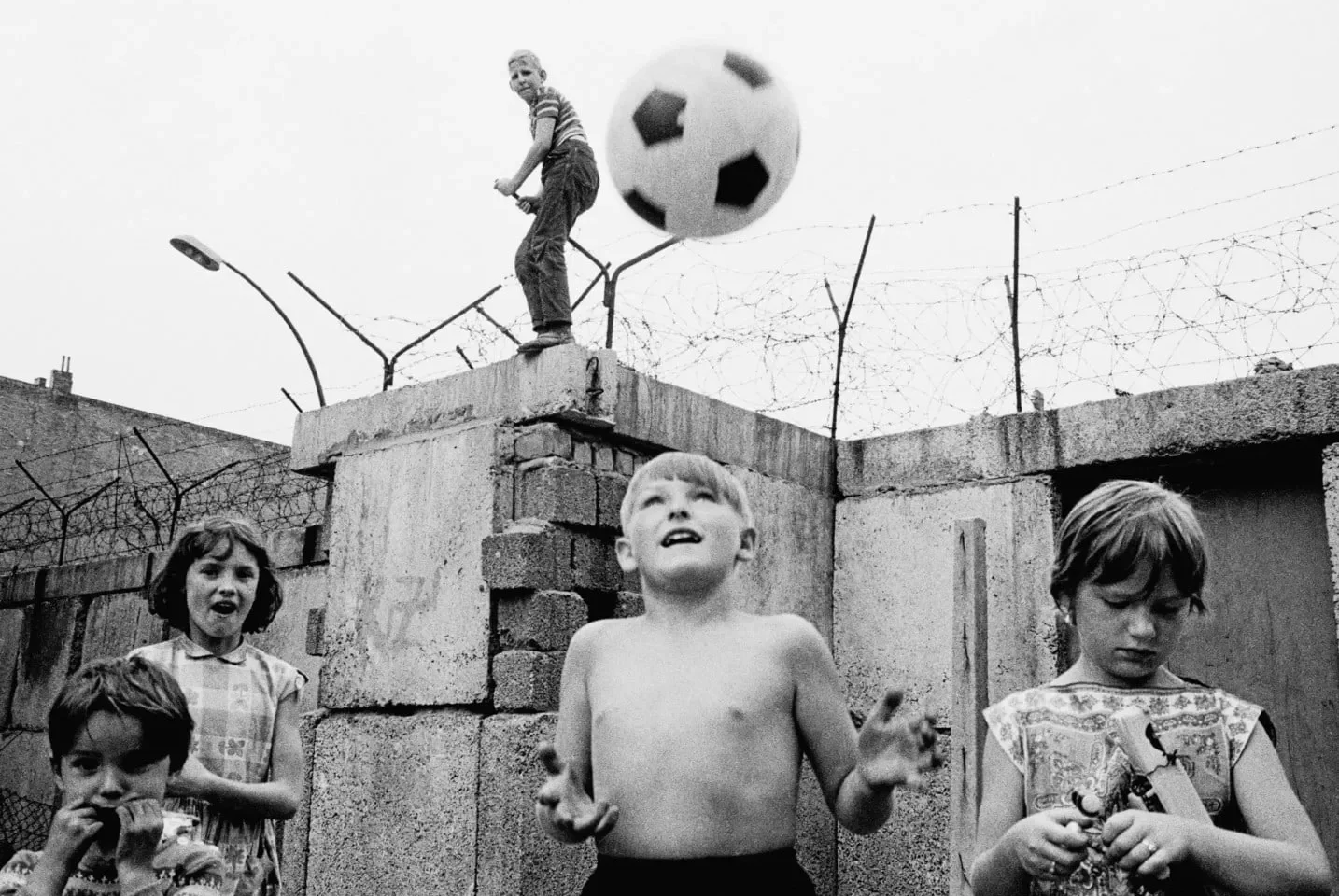
Imagen: Niños jugando futbol en el muro de Berlín, fotografía de Thomas Hoepker, 1993
Los niños están saliendo de la cama, se están poniendo pantaloncillos y camisetas. Están devorando el amor de sus madres, suena el tintín de los tazones, se reúnen en el valle, las colinas, el lote calcinado donde solía estar el supermercado. Saludan a sus amigos, están esperando a que llegue el que tiene la pelota. Están construyendo un arco a cada lado con palos y cordel. Los equipos se deciden por fuerza o astucia o por quién le cae mejor al de la pelota, y el partido se alarga a la par de las sombras del día de verano hasta que los niños están corriendo bajo la luz dorada. No todos. Un niño de rulos o una niña de trenzas o una criatura de cabeza rapada está pateando la pelota al arco de palos y cordel. La pelota está por cruzar y la luz se posa en sus rulos, sus trenzas, la curva de la nuca donde se une a la cabeza, y abren bien la boca de risa, de alegría y los niños están huyendo del cielo. El bombardero está tan bajo que se ve la bandera en la panza. Las franjas o círculos o estrellas son tan claras como la respiración desesperada de los niños.
Playtime
The children are getting out of bed, they are putting on shorts and T-shirts. They are scarfing down their mother’s love, bowls clinking, they are meeting in the valley, the hills, the burnt out lot where the supermarket used to be. They are waving to their friends, they are waiting for the kid with the ball to arrive. They are constructing a goal on each side, made of sticks and string. Their teams are decided by strength or by smarts or who the kid with the ball likes best and the game stretches like the shadows of the summer day until the children are running in the golden light. Not all of them. A curly haired boy or a girl with braids or a kid with a closely shaved head is kicking the ball toward the goal made of sticks and string. The ball is going to make it and the light falls on his curls, her braids, the curve of the neck where it meets the skull, and their mouths are open with laughter, with joy, and the children are running from the sky. The bomber so low the flag on the belly is visible. The stripes or circles or stars as clear as the children’s own panicked breaths.
(Tomado de Milk Candy Review, 2025)
Playtime
The children are getting out of bed, they are putting on shorts and T-shirts. They are scarfing down their mother’s love, bowls clinking, they are meeting in the valley, the hills, the burnt out lot where the supermarket used to be. They are waving to their friends, they are waiting for the kid with the ball to arrive. They are constructing a goal on each side, made of sticks and string. Their teams are decided by strength or by smarts or who the kid with the ball likes best and the game stretches like the shadows of the summer day until the children are running in the golden light. Not all of them. A curly haired boy or a girl with braids or a kid with a closely shaved head is kicking the ball toward the goal made of sticks and string. The ball is going to make it and the light falls on his curls, her braids, the curve of the neck where it meets the skull, and their mouths are open with laughter, with joy, and the children are running from the sky. The bomber so low the flag on the belly is visible. The stripes or circles or stars as clear as the children’s own panicked breaths.
La hora del juego
Los niños están saliendo de la cama, se están poniendo pantaloncillos y camisetas. Están devorando el amor de sus madres, suena el tintín de los tazones, se reúnen en el valle, las colinas, el lote calcinado donde solía estar el supermercado. Saludan a sus amigos, están esperando a que llegue el que tiene la pelota. Están construyendo un arco a cada lado con palos y cordel. Los equipos se deciden por fuerza o astucia o por quién le cae mejor al de la pelota, y el partido se alarga a la par de las sombras del día de verano hasta que los niños están corriendo bajo la luz dorada. No todos. Un niño de rulos o una niña de trenzas o una criatura de cabeza rapada está pateando la pelota al arco de palos y cordel. La pelota está por cruzar y la luz se posa en sus rulos, sus trenzas, la curva de la nuca donde se une a la cabeza, y abren bien la boca de risa, de alegría y los niños están huyendo del cielo. El bombardero está tan bajo que se ve la bandera en la panza. Las franjas o círculos o estrellas son tan claras como la respiración desesperada de los niños.
Micaela Miola es una traductora de inglés y español argentina graduada del Instituto de Educación Superior N.º 28 «Olga Cossettini” en Traducción literaria y técnico-científica en inglés. Se ha desempeñado principalmente como traductora y correctora de textos educativos, pero también cuenta con experiencia en traducción creativa como especialista en localización de videojuegos y webcómics. Recientemente ha dado sus primeros pasos en el ámbito literario al unirse al espacio de traducción literaria colectiva “Susurros chinos”.